Sealing: The Bit That Makes It Last
A second visit on a dry forecast that makes the clean last two or three times longer. Impregnating from £5.50 a square metre, joint-stabilising £7.50, wet look £8.50 to £12.
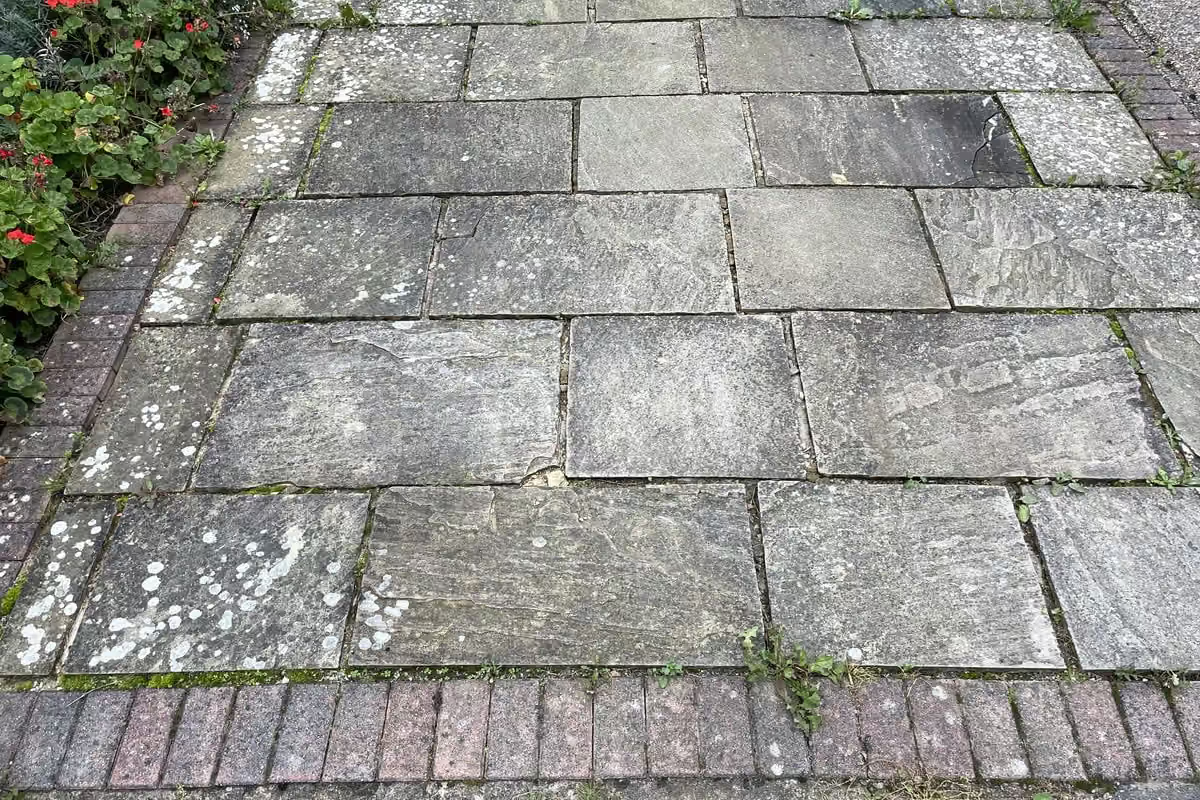
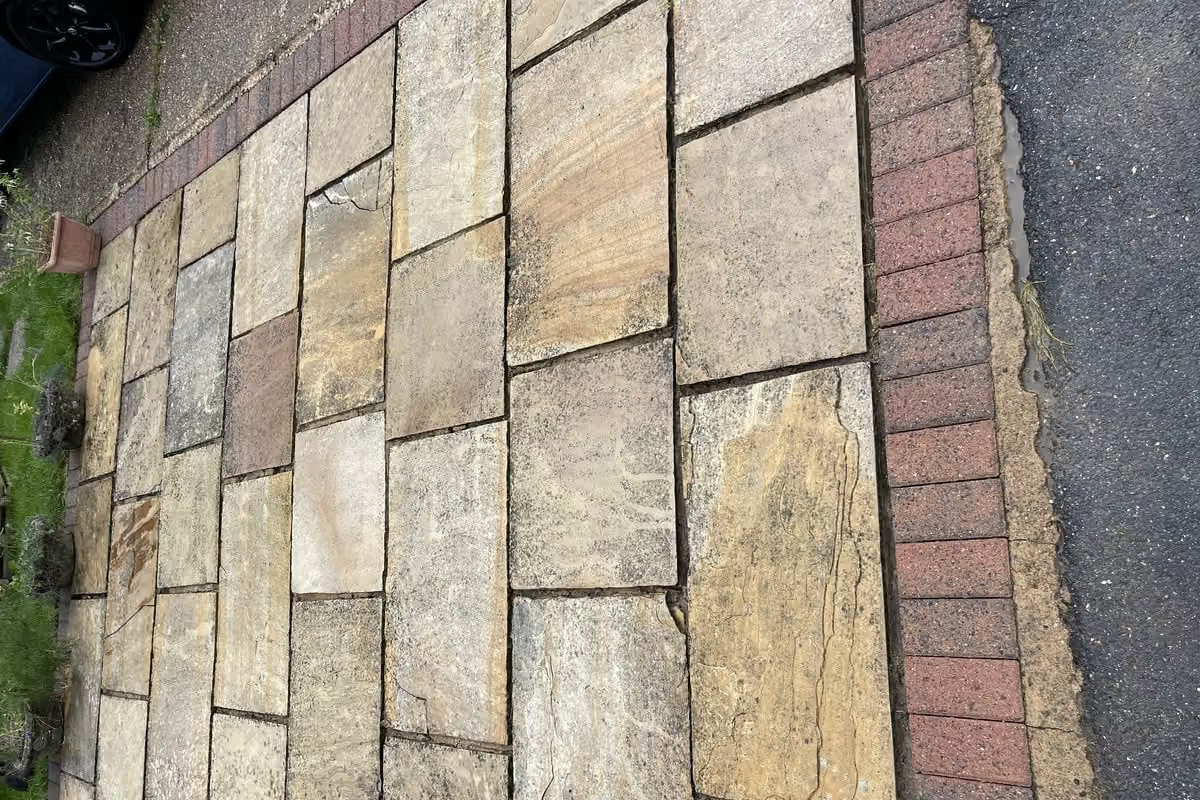
Sealing is the part of this trade with the most nonsense attached to it, so this page is mostly me telling you when not to bother.
A sealer is a liquid that either soaks into a porous surface or forms a film on top of it. What it buys you is time: time before the algae gets a foothold again, time before the joint sand washes out, time before oil and leaf tannin stain the stone. What it does not buy you is permanence, and anybody quoting ten years is quoting a number they cannot stand behind.
Why it is always a second visit
The surface has to be dry all the way through, not dry to the touch. That is two or three dry days after a wash for most paving, longer for thick natural stone in November.
Seal over trapped moisture and the water cannot escape. It sits under the sealer film and shows up as a milky white bloom, and the only fix is to strip the sealer off with a solvent and start again. I have seen it and it is a miserable day for everybody.
Then there is rain after application. Most sealers need around eight hours to cure enough to shed water. Rain inside that window ruins the coat, and on some products it leaves a permanent patchy finish rather than something that simply needs redoing.
So I do not seal on a doubtful forecast. If you are booked in and the forecast turns, I will ring you and move it, and losing a day annoys us both a lot less than doing the whole thing twice.
The three types I use, and what each is for
An impregnating sealer soaks into the stone and lines the pores without leaving a film. The look barely changes. Water beads instead of soaking in, and stains sit on the surface long enough for you to wipe them up. This is what I recommend on natural stone patios where people want the stone to look like stone.
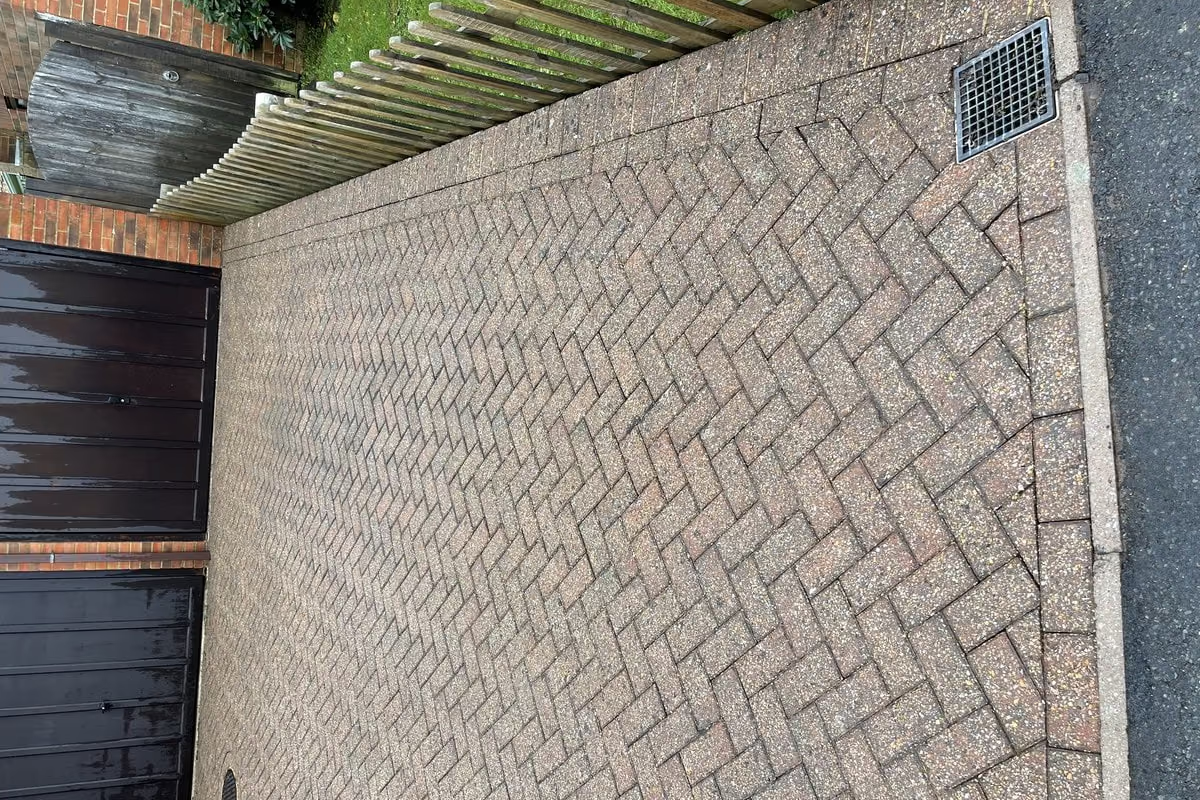
A joint-stabilising sealer is formulated for block paving. It penetrates the top of the kiln-dried sand and binds it into a firm plug that stays put in heavy rain and gives weed seed nothing to root into. On a block drive this is the one that earns its money.
A colour-enhancing or wet look sealer sits nearer the surface and deepens the colour, roughly the look wet paving has before it dries. On some sandstone it is genuinely striking. On other stone it looks like the patio has been varnished. It is entirely a matter of taste, which is why I do a test patch in a corner and let you look at it in daylight before I commit the whole area.
When sealing is not worth your money
On dense porcelain paving. Porcelain has almost no porosity, so there is nothing for an impregnating sealer to soak into and a film sealer will sit on top and eventually wear off in traffic patterns. Porcelain needs cleaning and it does not need sealing, and I will tell you that instead of taking the money.
On paving that is failing. If slabs are blown, spalling or lifting, sealing them locks in the problem and makes the eventual repair harder.
On a patio you are planning to replace within two years. The maths does not work.
On anything I have not cleaned properly first. A sealer fixes whatever is underneath it in place, including any dirt I missed.
The cost, and being straight about the margin
Sealer materials cost roughly 80p to £1.90 a square metre depending on the product. I charge £5.50 to £12 a square metre applied.
The gap is labour, a second trip, the risk of losing a day to weather, and the fact that applying sealer evenly is a slower and more finicky job than washing. I would rather write that down than have you find it out and wonder what else I was not saying.
If you want to buy the sealer and put it on yourself, it is a genuinely doable job on a small patio. Get the surface properly dry, apply thinly and evenly with a roller or a sprayer, do not let it pool, and watch the forecast. The most common amateur mistake is putting it on too thick, which leaves a sticky sheen that attracts dirt.
How long it lasts
Two to four years for an impregnating sealer on a patio. Less on a driveway that takes traffic and turning, because tyres scrub. Wet look finishes tend to need doing more often, not because they fail faster but because you notice when they start going patchy.
Re-sealing is easier than the first time. The surface is in better condition, there is less to clean off, and an impregnating sealer can usually be topped up rather than stripped.
What I need from you
Tell me the surface, roughly the area, and whether you want the look to change or stay as it is. If you want the wet look, say so and I will bring a sample and do a patch on the day I clean it, so you have a week to decide before I come back.
Sealing is priced as its own visit and quoted with the clean, so you can see both numbers and decide whether the second one is worth it. On plenty of jobs my advice is that it is not.
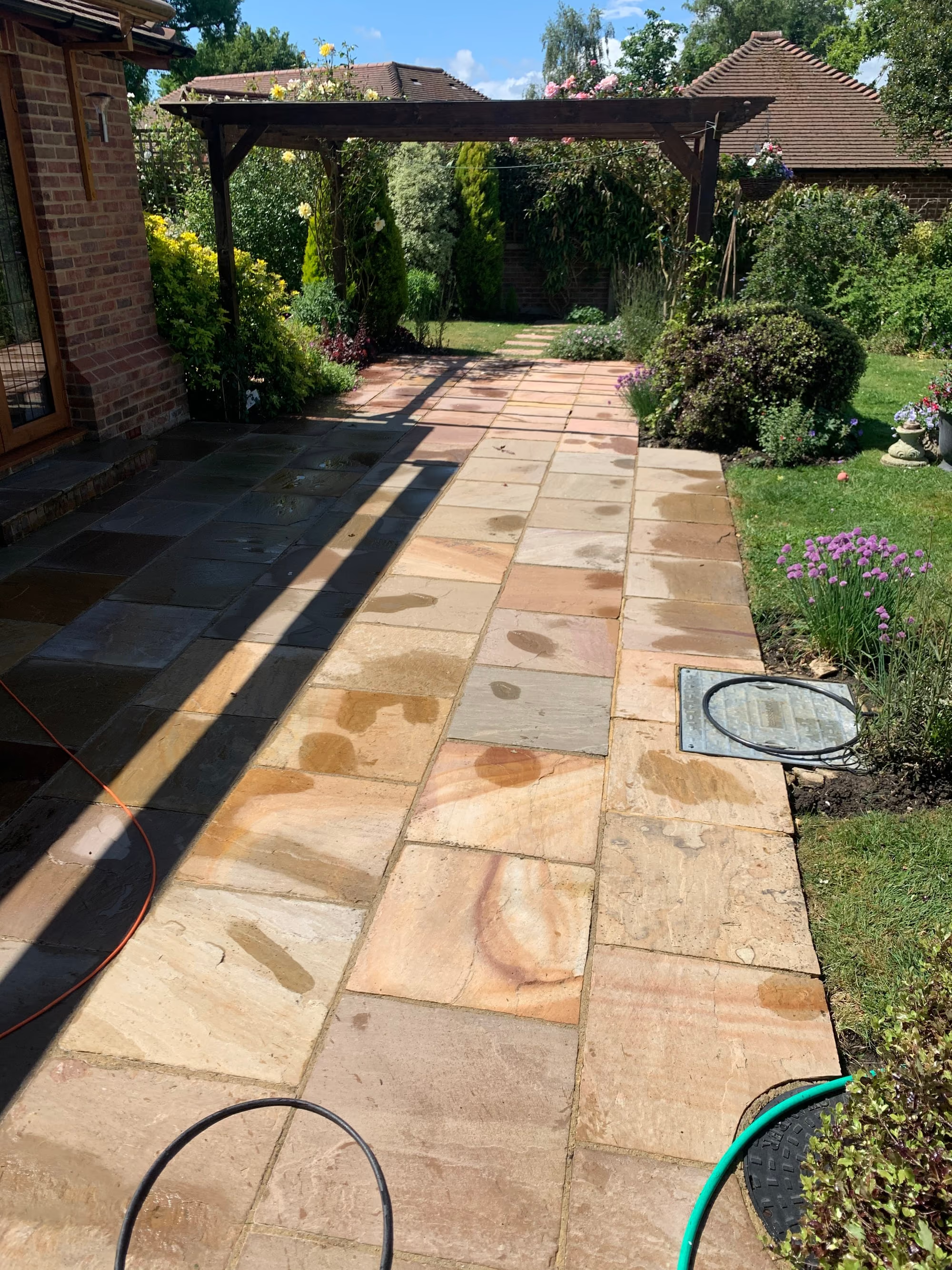
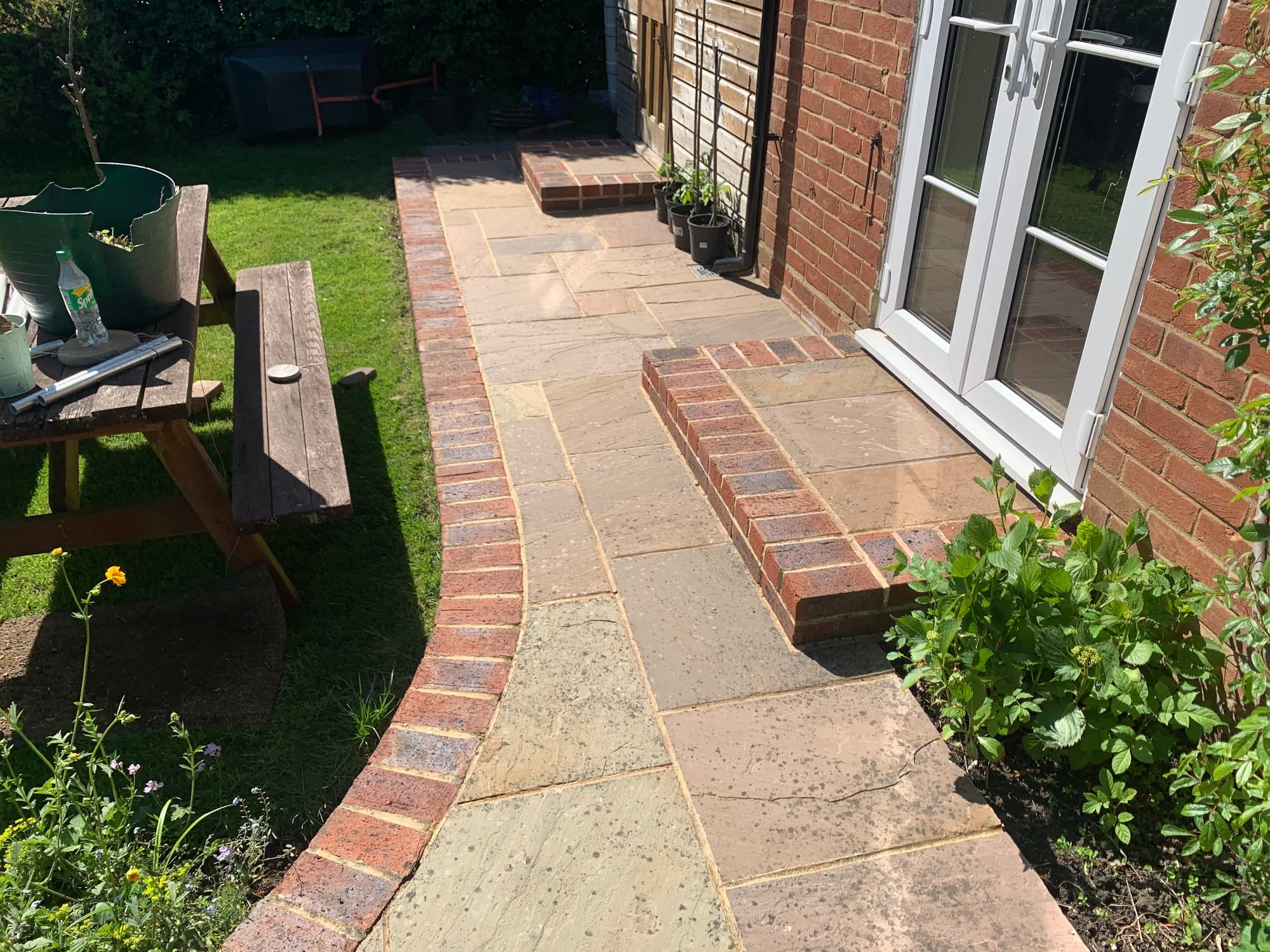
From my own jobs
What this looks like in practice
Questions
Sealing: what people ask
Is sealing actually worth it?
On some surfaces yes, on others no, and I will say which. On block paving a joint-stabilising sealer is genuinely useful: it binds the sand, slows weeds and roughly doubles the time before it needs doing again. On dense porcelain it is close to pointless because there is nothing for it to soak into. On sandstone it depends on whether you mind the colour change.
What is the difference between the sealers you offer?
An impregnating sealer soaks in and leaves the look almost unchanged, which is what most people want on natural stone. A joint-stabilising sealer is formulated to bind the kiln-dried sand in block paving joints. A colour-enhancing or wet look sealer sits nearer the surface and noticeably darkens the stone, which some people love and some regret, which is why I do a test patch first.
How long does a sealer last?
Two to four years for an impregnating sealer on a patio, less on a driveway that takes traffic and turning. Wet look finishes tend to need doing more often because you notice when they start to go patchy. Nobody honest will tell you ten years.
Why does sealing need a separate visit?
Because the surface has to be dry all the way through, not just dry on top, and that is two or three dry days after a wash. Seal over trapped moisture and you get a milky bloom under the sealer that can only be fixed by stripping it off and starting again. The second visit is not me padding the bill, it is the only way it works.
What if it rains after you seal it?
Rain within about eight hours of application will ruin it, so I do not seal on a doubtful forecast. If the forecast turns while I am booked in, I will ring you and move it. Losing a day annoys us both considerably less than doing the whole thing twice.
Get a price
Send me photos and I will price your sealing
Two or three photos and a rough size is all I need. Fixed price back in writing, usually the same day.
Sent
That is with me.
I read every one myself. If you sent photos I can usually come back with a fixed price the same day, or the next morning if it arrives late.