Should I Seal My Block Paving?
Block paving sealing is about stabilising the joint sand, not waterproofing the blocks, which is why silane-siloxane is the wrong product to buy for it.
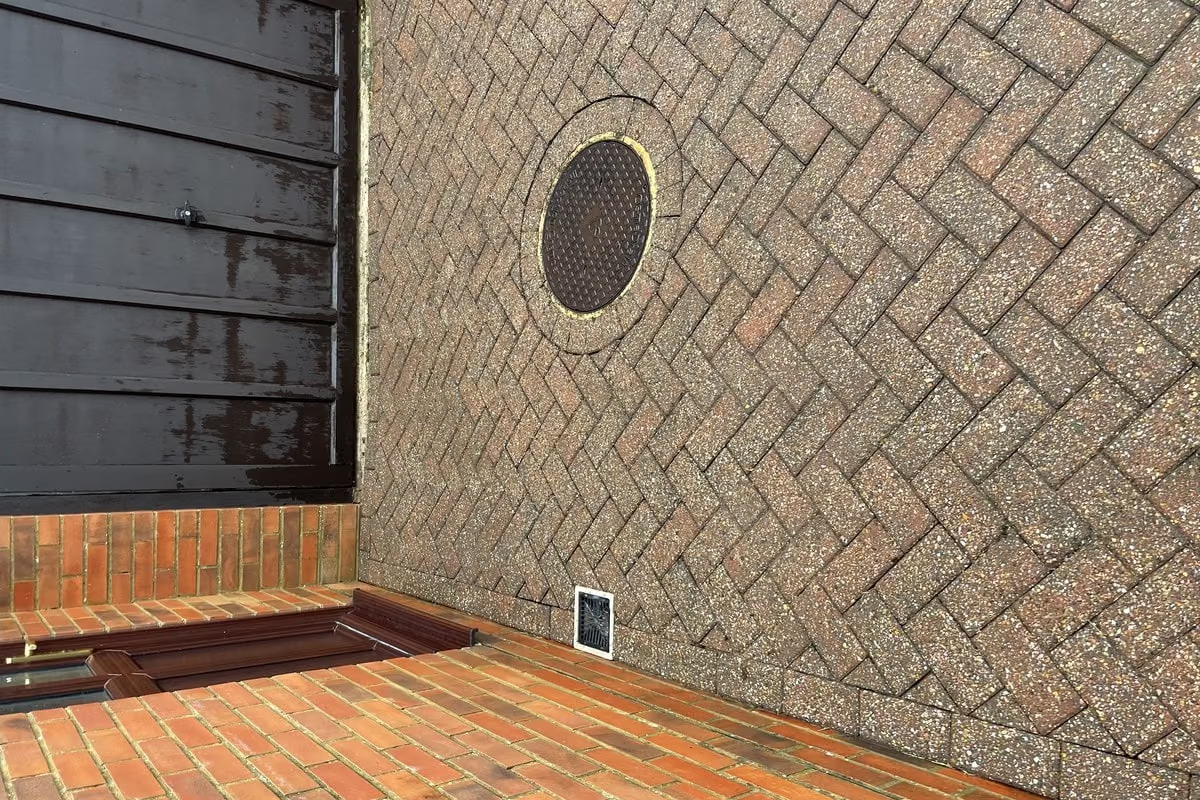
I do not seal block paving. Not at the moment, so this is a briefing rather than a sales pitch, and the last section is what to ask whoever does quote you.
This is a different question from whether to seal a patio, and the answer turns on something most sealing advice never mentions: on block paving, the thing you are sealing is the sand, not the blocks.
Get that wrong and you can buy an excellent product that does nothing useful for your drive.
What actually fails on block paving
A concrete block is a dense, durable thing. It is not especially porous, it does not stain easily, and left alone it will outlast most of the people reading this.
The joints are the weak point. Kiln-dried sand packed between blocks does the structural work, transferring load sideways so the surface behaves as one flexible mat rather than a few hundred loose pieces. That sand is loose material sitting in a slot, exposed to the weather.
Heavy rain washes the top of it out. Wind-driven rain, which is what you get on exposed coastal sites, scours it faster. Pressure washing removes it wholesale. And every millimetre lost is a millimetre of interlock gone.
So the useful question is not “how do I protect my blocks” but “how do I keep the sand where it is”.
Why silane-siloxane is the wrong answer
Search for paving sealer and a lot of what comes back will be silane-siloxane impregnating sealer. It is genuinely excellent stuff and it is the right choice for natural stone.
Silane-siloxane works by penetrating a porous material and lining the pore walls with a water-repellent layer. It does not form a film. It leaves the appearance essentially unchanged. On thirsty sandstone that is exactly what you want, because the problem there is water getting into the stone.
On block paving it addresses a problem you do not have. Your blocks are not failing from water ingress. Your joints are emptying. A penetrating sealer soaks into loose sand grains without binding them to each other in any meaningful way, and the sand still washes out.
You will have bought a good product for the wrong job.
What you actually want
A joint-stabilising sealer. These are typically acrylic or polyurethane based, applied generously so they flood into the top of the joint, and they cure into a firm but slightly flexible plug that binds the sand grains together.
The flexibility matters. Block paving is designed to move under load, and a rigid joint will crack.
What that buys you: the sand stays put in heavy rain, weed seed landing on the joint has nothing to root into, and the drive keeps its interlock. In practice it roughly doubles the time before the drive needs cleaning again.
It costs £7.50 a square metre at my rates, so £262.50 on a 35 square metre drive, on a separate visit because the sand has to be bone dry.
The order of operations, which is not negotiable
Clean the drive properly.
Let it dry completely. Not surface dry, dry through.
Re-sand with kiln-dried sand, brushed in and worked down until the joints are genuinely full.
Let the sand settle, ideally through a shower and a dry spell, and top up.
Then seal.
Sealing before re-sanding, or over damp sand, gives you a joint that is bound at the top with a void underneath. It looks finished and it is not.
Who should not bother
If your drive is sheltered, on free-draining ground, and stays clean for two or three years anyway, sealing is money spent on a problem you do not have.
If the drive has settled or blocks are sunken, fix that first. Sealing a moving drive locks the current geometry in and makes lifting and re-laying harder.
If you are planning to replace the drive within a few years, obviously not.
Who should
Exposed sites, particularly coastal. Wind-driven rain is the main enemy of joint sand and a stabilising sealer is the direct answer to it.
Anyone who has had weeds back within a year of the last clean.
Anyone whose blocks have started to rock, once the joints have been properly refilled. Stabilising fresh sand is the best chance of stopping the movement getting worse.
Drives that take a lot of turning, where tyre scrub pulls sand out of the joints near the entrance.
What sealing does not do
It does not stop the drive getting dirty. Algae will still grow on the surface of a sealed drive, it just will not get into the joints. You will still need it cleaned, less often.
It does not stop weeds entirely. Seed blows in and germinates in the thin film of dirt that accumulates on top of any surface. What it stops is weeds rooting down into the joint, which is the sort that damages paving.
It does not fix a structural problem. If your sub-base has failed, sealing the surface changes nothing.
It does not last forever. Three to five years on a drive, less where tyres turn.
The one-line version
Seal block paving to hold the sand, with a joint-stabilising product, after a proper re-sand, on an exposed or weed-prone drive. Do not buy an impregnating stone sealer for it, however good the reviews are.
Doing it yourself
Block paving sealer is sold in 5 and 25 litre containers and it is a job a competent person can do.
Coverage is lower than people expect, because you are flooding joints rather than coating a surface. Budget on 3 to 4 square metres per litre for the first coat on an unsealed drive, which is roughly half what the tin claims.
The sequence matters more than the technique. Clean, dry completely, re-sand, let the sand settle through a shower and a dry spell, top up, then seal.
Apply with a low pressure sprayer and spread with a soft broom or a roller, working it into the joints rather than just wetting the block faces. Two coats, the second while the first is still tacky.
Do not let it pool. Puddles cure glossy and have to be dissolved off with solvent.
Give it a full day before driving on it, and check the product’s own guidance because some need longer.
The two most common failures are sealing over damp sand, which leaves the joint bound at the top with a hollow underneath, and applying too heavily, which leaves a plasticky sheen that traps dirt.
What it does to the appearance
Worth knowing before you commit, because it is not reversible in any easy way.
Most joint-stabilising sealers darken block paving slightly and add a low sheen. On a faded forty-year-old drive that reads as bringing the colour back, and most people like it.
Some products are sold as matt or invisible, and those change the look very little.
A wet look block paving sealer will make the drive noticeably glossy, and on a large area that can look more like a forecourt than a driveway. It also becomes slippery when wet, which on a sloping drive matters. If you want that finish, ask for an anti-slip additive in the top coat.
Ask to see a test patch. Any contractor can do one in a corner and it takes ten minutes.
When it needs redoing
Three to five years on most drives, less at the entrance where cars turn and tyres scrub.
You will know because the joints start losing sand again and weeds reappear in the same places.
Re-sealing is easier than the first application. Clean, top up the sand where it has gone, and re-coat. There is no need to strip a joint-stabilising sealer the way there is with a failing acrylic film on imprinted concrete.
The counter-argument
To be fair to the other side of this.
Sealing block paving is not maintenance in the way that re-sanding is. A drive that is cleaned and properly re-sanded every two years, and never sealed, will last perfectly well. Block paving in this country managed without sealers for decades.
What sealing buys is a longer interval between cleans and fewer weeds. It is a convenience purchase, and on a sheltered drive that stays clean anyway it is a convenience you do not need.
I do not sell sealing at all, so take this for what it is worth: if you only have the budget for one of them, spend it on the sand every time.
What to ask whoever quotes for it
Is it a joint-stabilising sealer? That is the product for block paving. If the quote says silane-siloxane, or the salesperson talks about protecting the blocks rather than binding the joints, they have brought the wrong tin.
Are you re-sanding first, and with kiln-dried sand? Sealing a half-empty joint fixes the sand shortage in place. The joints have to be full and bone dry before anything goes on them.
How long after the clean? A separate dry visit. The sand has to dry all the way down, which is longer than the surface takes.
Can I see a test patch? Ten minutes in a corner, and it tells you what the finish will actually look like on your blocks rather than on a brochure.
The cleaning and the re-sanding I do. The sealing is somebody else’s job.
Get a price
Send me a couple of photos
Fixed written quote, no visit needed for most jobs, and prices you can already check on this site before you ask.
Sent
That is with me.
I read every one myself. If you sent photos I can usually come back with a fixed price the same day, or the next morning if it arrives late.