Block Paving Cleaning, Re-Sanding & Sealing
Cleaned, re-sanded with kiln-dried sand, and stabilised if you want it. £5.50 a square metre with the sand included, because a clean without it is half a job.
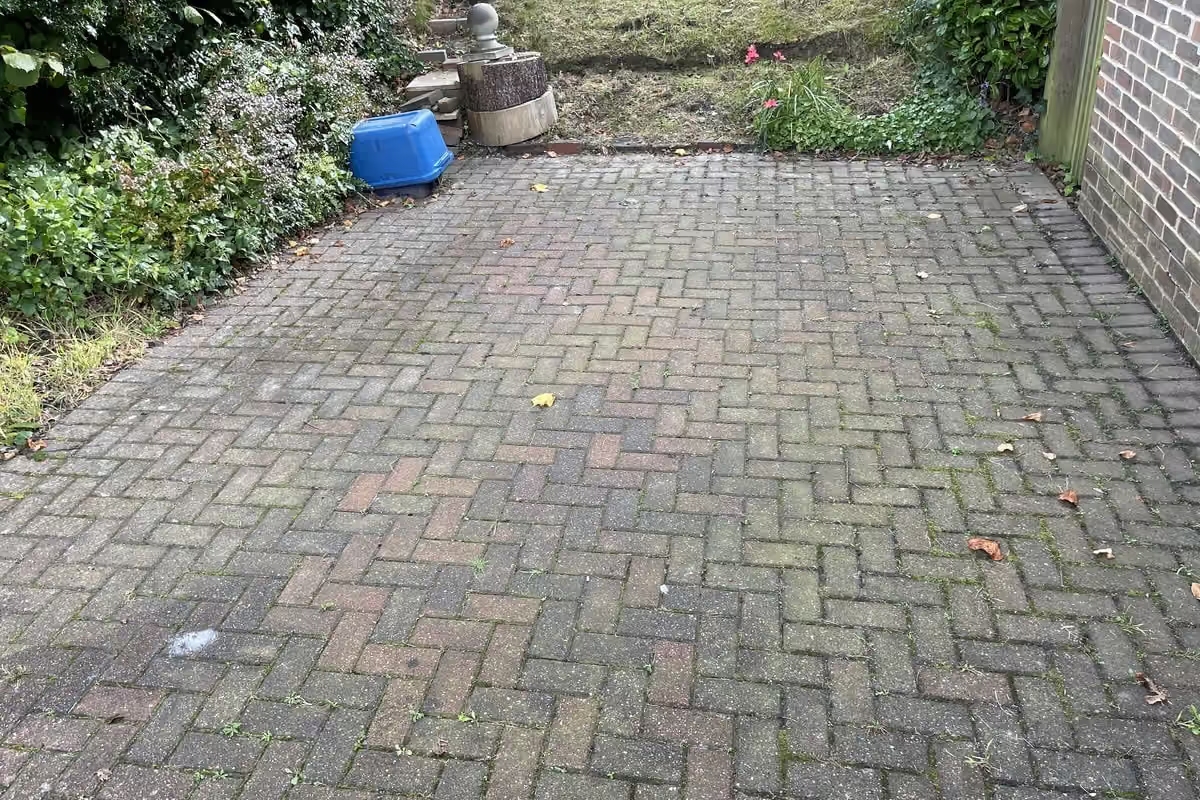
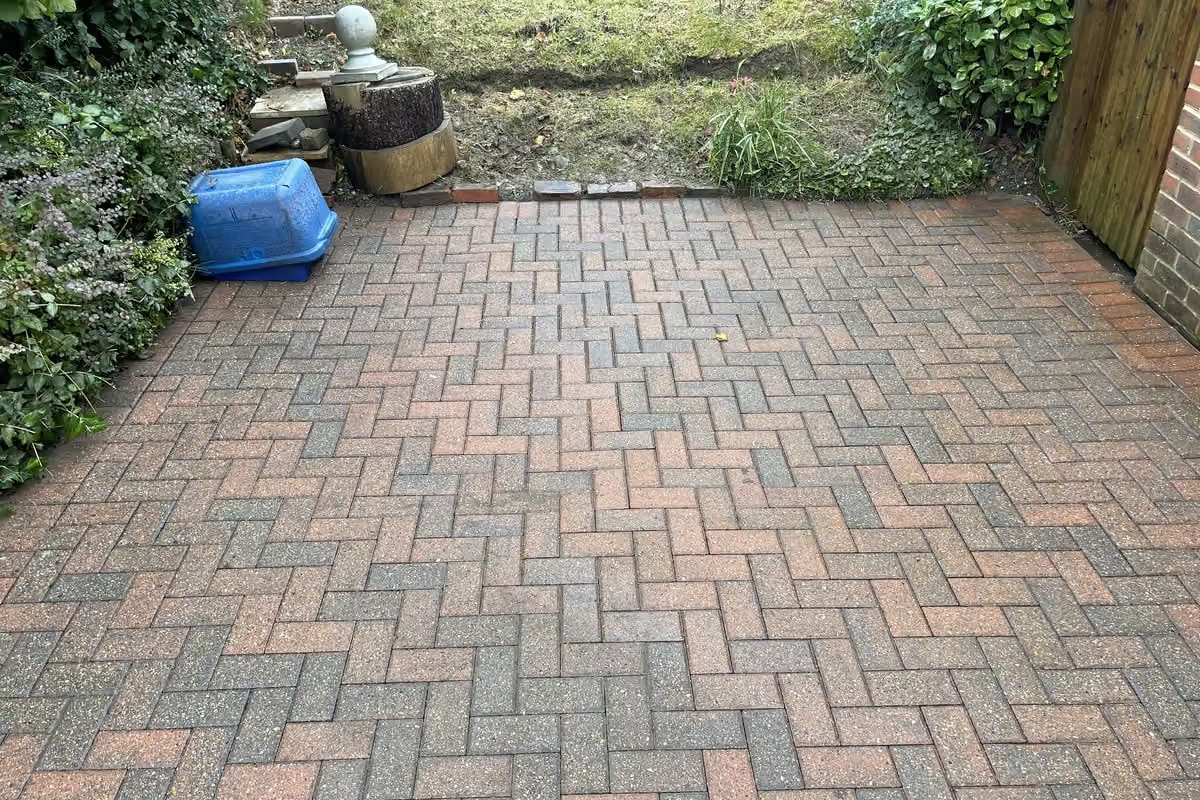
This page exists because block paving is the most common job I do and the one most often done badly. The failure is almost always the same: the drive gets washed, it looks tremendous, and nobody puts the sand back.
Why the joint sand matters more than the blocks
Block paving is a flexible pavement. There is no mortar anywhere in it. What holds it together is friction between the blocks, and that friction only exists because the joints are packed with sand.
When the joints are full, a load pressing down on one block is shared sideways into its neighbours and spread across a wide area of the sub-base. When the joints are empty, that load stays on the one block. Over a few hundred car movements you get rocking, chipped edges where blocks knock against each other, and eventually a visible dip where the entrance takes the most turning.
Weeds are the visible symptom and structure is the real problem. A drive with hollow joints is failing slowly whether or not anything is growing in it.
The clean
Thick moss gets scraped off first. It sounds crude and it saves an hour of standing there trying to dissolve it with water, and it means the surface cleaner is removing dirt rather than mowing a lawn.
The open area is then done with a rotary surface cleaner, which keeps the pass even and stops the striping you get from a lance swung across in arcs. Edges, the course along the kerb and anything around a drain or a manhole get a lance at a wide fan angle from further back.
I work in a consistent direction and overlap each pass. Block paving shows inconsistency more than any other surface because the joints give your eye a grid to compare against, and a missed overlap is visible from an upstairs window for years.
The re-sanding
The surface has to be dry before sand goes in. In July that can be the same afternoon. In February it is usually the following day, and I would rather come back than brush damp sand across a wet drive and leave you with joints that are full for the top ten millimetres and hollow underneath.
Kiln-dried sand is brushed diagonally across the blocks so it drops in rather than skidding along the joint lines. I work it in, let it settle, then go back over it. On a drive that has been empty for years the joints will take a surprising amount, and they will take more again after the first rain, so it is worth keeping half a bag to top up in a month.
Do not use building sand. It is damp, it clumps, it stains the blocks and it never reaches the bottom of the joint.
Stabilising sealer
A joint-stabilising sealer soaks into the top of the sand and binds it into a firm but slightly flexible plug. It is the one sealer I actively recommend on block paving, for three reasons that are easy to check: the sand stops washing out in heavy rain, weed seed cannot get a root into a bound joint, and the drive stays looking done for roughly twice as long.
It is £7.50 a square metre and it needs a separate dry visit, because the sand has to be bone dry when it goes on.
What I would steer you away from on a driveway is a silane-siloxane impregnating sealer. Those are excellent on natural stone, where the job is to stop water soaking into a porous slab. On block paving the job is to bind the joints, and silane-siloxane does not do that. It is the wrong tool sold for the right-sounding reason.
Resin jointing compounds
People ask about the resin compounds that set hard in the joint. On a path or a light-use patio they work well and keep weeds down for years. On a driveway I am more cautious, because they are rigid and block paving is designed to flex. Traffic tends to crack them, and once cracked they let water in and hold it there.
Sunken blocks are not a cleaning problem
If part of your drive has settled, cleaning will make it more obvious rather than less, because a clean uniform surface shows a dip that grime was hiding.
A small dip can be lifted, the sharp sand underneath screeded level, and the blocks put back. That is a separate job and a worthwhile one. If a large area has moved, something in the sub-base has failed, water is probably getting somewhere it should not, and you need a groundworker rather than a jet washer. I will tell you that for nothing rather than take money for a clean that makes the problem more visible.
Colour
Block paving fades. The pigment is through the body of most modern blocks but the top few millimetres take the UV and the traffic, and after fifteen years a red block is a lighter red than it was.
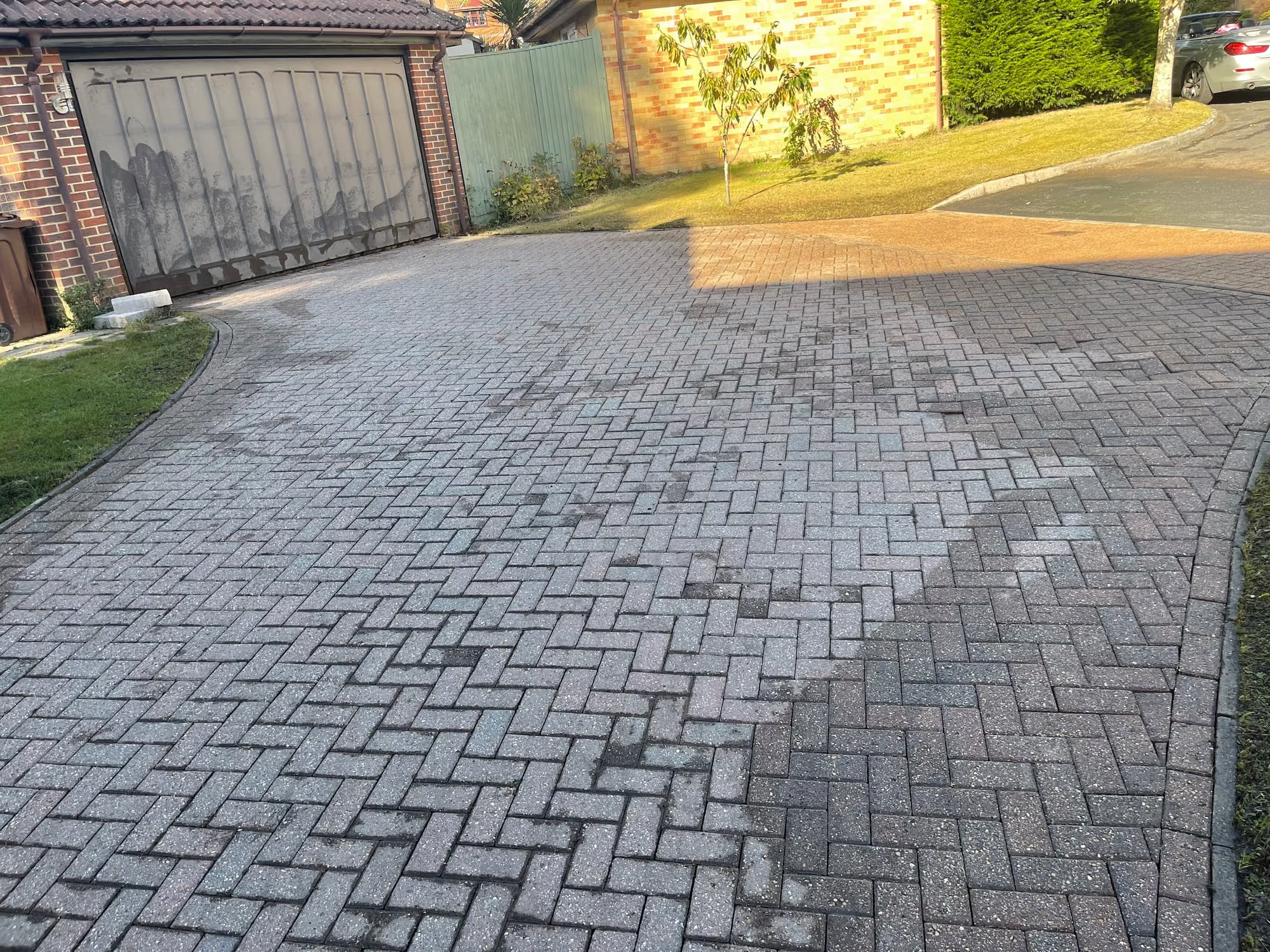
Cleaning takes off the grey film and gives you back the colour that is actually there, which is usually a great deal more than people expect and occasionally slightly less than they hoped. The photographs on this page are all genuine and none of them have been adjusted, which is the only useful way to set that expectation.
The price
£5.50 a square metre, kiln-dried re-sanding included. Joint-stabilising sealer £7.50 a square metre on a separate visit. Moss and algae treatment £1.50 a square metre if you want the regrowth slowed.
Minimum job £150. Quoted in writing from photographs, fixed before I start.
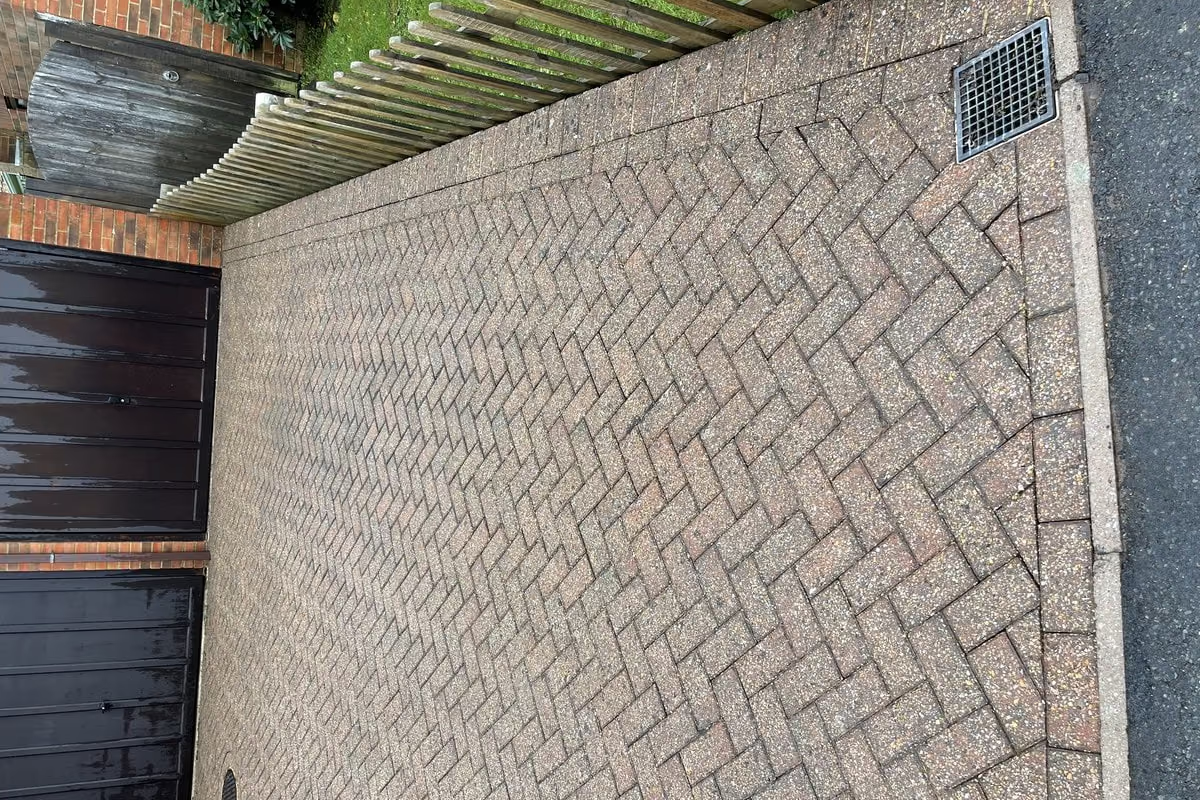
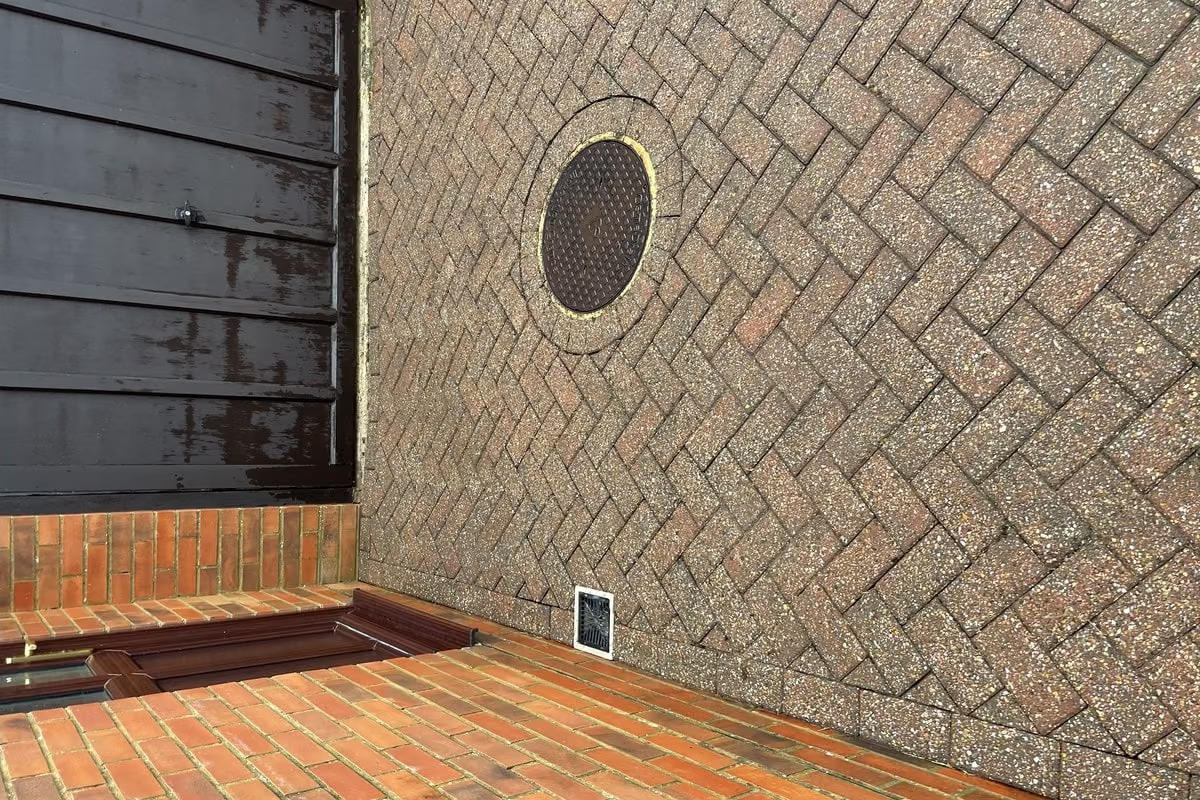
From my own jobs
What this looks like in practice
Questions
Block paving & re-sanding: what people ask
What is kiln-dried sand and why does it matter?
Ordinary building sand is damp and clumps, so it bridges across the top of a joint instead of dropping to the bottom. Kiln-dried sand has been heated until it is bone dry, which lets it run like liquid and fill the joint the whole way down. It is the difference between a joint that is full and one that just looks full.
How long after cleaning can the drive be re-sanded?
The surface has to be dry or the sand will not travel. In summer that can be the same afternoon. In February it is usually a return trip a day or two later. I would rather come back than brush damp sand across a wet drive and call it done.
Should I use resin jointing compound instead of sand?
On a driveway, generally not. Resin compounds are rigid, and block paving is designed to flex under load. On a light-use path or patio they work well and keep weeds down for years. On a drive that takes a car every day, the movement tends to crack them and then water gets underneath.
Some of my blocks have sunk. Can cleaning fix that?
No. Sinking is a base problem, not a surface one, and washing it will make it more obvious rather than less. Small dips can be lifted, re-laid on fresh sharp sand and put back, which is a separate job. If a large area has settled, something underneath has moved and it needs a groundworker, not me.
Get a price
Send me photos and I will price your block paving & re-sanding
Two or three photos and a rough size is all I need. Fixed price back in writing, usually the same day.
Sent
That is with me.
I read every one myself. If you sent photos I can usually come back with a fixed price the same day, or the next morning if it arrives late.