Why Is My Block Paving Going Green?
The green on your block paving is algae, and understanding why it grows where it does explains why washing alone never keeps it away for long.
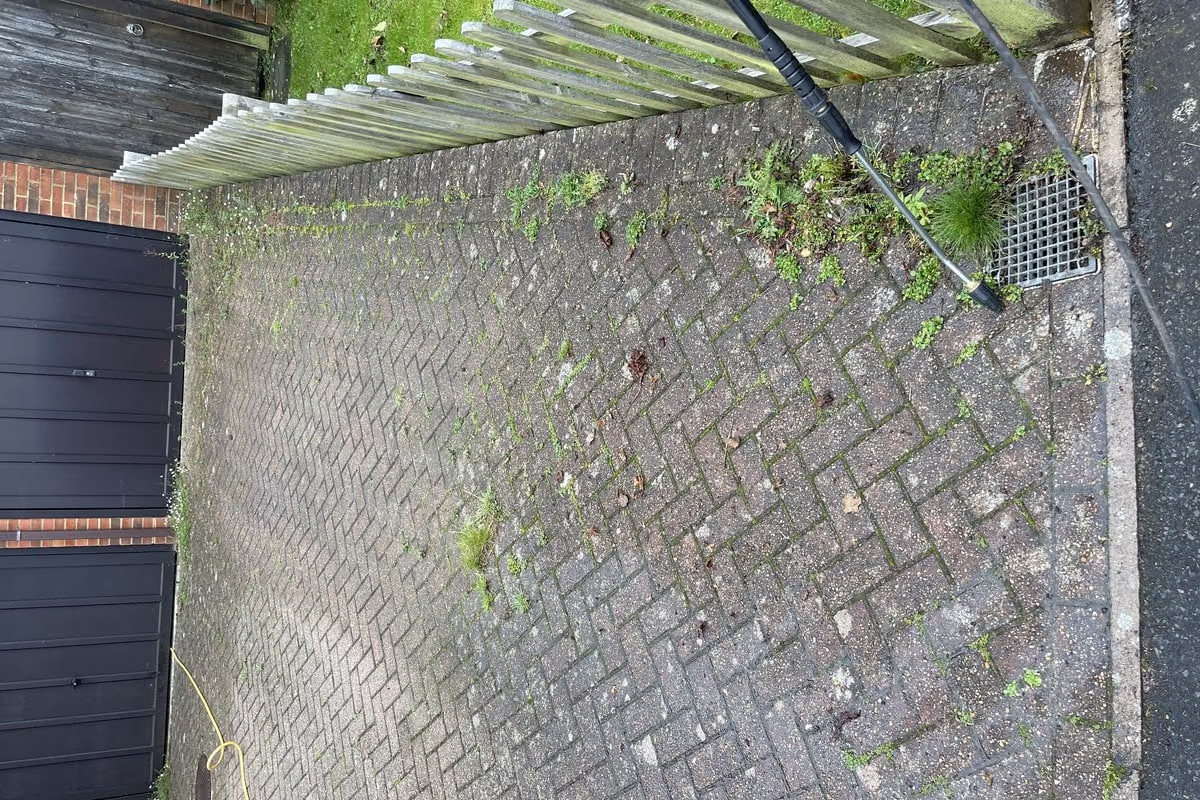
The green is algae. Specifically it is usually a mix of green algae and cyanobacteria, both of which are photosynthetic organisms that need three things and nothing else.
Light, which they get. Carbon dioxide, which they get. And water.
Water is the only one you have any influence over, and it is why two identical drives in the same street can be in completely different condition.
Algae is not dirt
This distinction matters because it explains why the problem behaves as it does.
Dirt is deposited. It arrives, sits there, and if you remove it, it is gone until more arrives.
Algae is grown. It is a living population reproducing on your paving, and removing the visible layer does not remove the population. Spores and cells survive in the surface texture of the blocks and in the joints, and the colony rebuilds from what is left.
That is why a drive can be visibly green again within months of a thorough clean, and why customers reasonably conclude the clean was not very good. It usually was. The conditions simply have not changed.
Why some drives and not others
Aspect. North-facing paving gets little direct sun between October and March. A surface that never dries fully is a surface with permanent growing conditions. South-facing paving in the open dries within an hour or two of rain for most of the year, and dry paving does not support algae.
Shade from anything. A fence, a hedge, the house itself, a car parked in the same spot every day. Shade is shade.
Trees. They block light, drop leaves that hold water against the surface, and reduce the airflow that would otherwise dry it.
Ground conditions. Paving over free-draining chalk dries from below as well as above. Paving over clay draws moisture up from a sub-base that stays wet for weeks.
Coastal salt. Salt is hygroscopic, meaning it absorbs moisture from the air. Coastal paving carries a permanent light salt loading and therefore stays damp longer than the same paving inland. This is the reason a Peacehaven drive greens over faster than one at Uckfield with the same aspect.
Surface texture. A rough, open-textured surface holds water and gives spores somewhere to lodge. This is why a drive that has been pressure washed too hard, with the wearing course eroded off the blocks, goes green faster afterwards than it did before.
Why the joints are always worst
Look at any green drive and the growth is heaviest along the joint lines.
Joint sand holds water. It is a fine porous material sitting in a slot, and it stays damp far longer than the block surface either side of it. Where the joints have partly emptied, the recess collects water and organic debris and becomes a small planter.
That is the practical case for keeping joints properly filled, quite apart from the structural argument. A full, tight joint holds much less water than a half-empty one.
What washing does and does not achieve
Washing removes the visible biomass. The drive looks transformed, because visually it is.
What it does not do is remove the cells and spores held in the surface texture of the blocks, or change any of the conditions that let the colony establish in the first place.
So the clock starts again from a low population rather than from zero, in the same conditions that grew it the first time.
What actually extends the interval
A biocide treatment. This is the direct answer. A proper exterior biocide applied after cleaning kills the residual population rather than just removing the visible layer. It costs £1.50 a square metre and typically buys an extra year, sometimes two on a moderately affected drive. On a shaded or coastal drive it is the best value item on my price list.
Proper re-sanding. Full joints hold less water than empty ones and give growth less to colonise.
A joint-stabilising sealer. Binds the sand so it stops washing out and stops the joints becoming water-holding recesses.
Cutting back overhanging growth. Free, and more effective than most people expect. Getting an extra two hours of sun and some airflow onto a drive changes its drying behaviour materially.
Clearing leaves promptly in autumn. Wet leaves left on paving hold water against it for weeks and leave tannin staining as a bonus.
What does not help
Turning the pressure up. Eroding the block surface makes it rougher, and a rougher surface holds more water and supports more growth. You will be cleaning it more often, not less.
Bleach. It kills what it touches and does nothing after that, it can lighten the blocks unevenly, and the run-off is not something you want in a border or a watercourse. Proper biocides are formulated to keep working for weeks and to break down sensibly.
Salt or washing-up liquid, both of which appear in online advice. Salt actively makes the problem worse for the reason described above. Detergent leaves a residue that holds dirt.
The realistic expectation
On a north-facing drive under trees on clay, annually, or every two years with a biocide.
On a south-facing open drive on chalk, every two to three years, and there is no benefit to doing it sooner.
If yours is going green within six months of a proper clean, something specific is going on: standing water, a downpipe discharging onto it, a leaking gutter, or a surface that has been eroded by over-aggressive cleaning in the past. That is worth diagnosing rather than just washing again.
The specific green things, and why it matters
Not everything green on your drive is the same organism, and they respond differently.
Green algae. The bright green film that appears fastest and is most obviously seasonal. Single-celled, sitting on the surface, and the easiest thing on this list to remove. Comes back fastest too.
Cyanobacteria. Often mistaken for algae. Tends towards a darker, blackish-green and forms a slightly slimy mat. More resistant to drying out, which is why it survives on surfaces that get some sun.
Moss. An actual plant with structure, rooting into joints and surface texture rather than just sitting on top. On shaded, damp, inland drives it can be several millimetres thick. Needs scraping before washing, because a jet just cuts channels through it.
Lichen. The hard, flat, grey-green or black discs. A symbiosis of fungus and alga, rooted into the top layer of the paving. The one that will not come off with pressure and needs a biocide and several months.
Liverworts. Flat green sheets, usually in permanently wet spots, often near a downpipe or where water pools. If you have these, you have a drainage problem as well as a growth problem.
Knowing which you have tells you what will work. Algae comes off with a wash. Moss needs scraping first. Lichen needs chemistry and time. Liverworts need the water fixing.
The mistake of cleaning too hard
There is an intuitive assumption that if the green keeps coming back, the cleaning was not aggressive enough.
It is exactly backwards.
Turning the pressure up erodes the wearing course off the blocks. The resulting surface is rougher and more open, with more surface area and more water-holding capacity, and it supports a larger population of everything on the list above.
I have cleaned drives where the previous contractor’s pressure damage is the reason the customer is calling me eighteen months later instead of three years later.
The things that extend the interval are chemistry, drainage and sunlight. Pressure is only for removing what is already dead or loose.
Diagnosing an unusually bad patch
If one area is far worse than the rest, it is almost always one of five things, and four of them are fixable for nothing.
A downpipe discharging onto the surface rather than into a gully.
A leaking gutter joint above it.
A low spot where water stands after rain.
Permanent shade from something that could be cut back.
An object left in the same place, a bin, a planter, a trailer, holding damp underneath it.
Walk out during heavy rain and watch where the water goes. Ten minutes of that tells you more than any product will.
Get a price
Send me a couple of photos
Fixed written quote, no visit needed for most jobs, and prices you can already check on this site before you ask.
Sent
That is with me.
I read every one myself. If you sent photos I can usually come back with a fixed price the same day, or the next morning if it arrives late.