Driveway & Patio Cleaning in Lewes
Georgian frontages, flint walls and York stone that has been down since before anyone thought about pressure washers. Lewes is the town where I turn the machine down the most.
- Distance
- 10 miles
- Drive
- 20 min
- Postcode
- BN7
- Rate
- from £4.50/m²
Lewes is the job where restraint earns its money. Almost everything about the town pushes against using a pressure washer the way you would on a modern block paved drive.
The county town is built on a chalk spur above the Ouse, and the housing reflects several centuries of building on a constrained site. Georgian townhouses fronting straight onto the pavement on the High Street and Keere Street. Flint and brick cottages through Cliffe and Southover, a good number of them listed. Then post-war and modern housing spreading up Landport and Nevill, which is ordinary work and behaves like anywhere else.
It is the older half that needs a different approach.
Old stone does not behave like new stone
The paving I meet in the older parts of Lewes is generally one of three things, and none of them like high pressure.
York stone flags, often a century or more old, laid on lime mortar or straight onto sand. York stone splits along its bedding planes, and where a flag has begun to delaminate a jet finds the weakness and takes the top layer off in sheets. Once that has happened there is no putting it back.
Old brick paving, usually softer than modern brick and frequently already spalling at the arrises. Pressure rounds the edges further and opens the face.
Lime pointing, which is everywhere in this town and is the single easiest thing to destroy with a lance. Lime mortar is deliberately softer than the stone it beds, so that movement cracks the mortar rather than the stone. Water at pressure blows it straight out, and then you have an open joint feeding water into the wall or the sub-base behind.
So in the old parts of Lewes I work at pressures that would look almost pointless to somebody watching me do a driveway at Polegate. Wide fan, long standoff, more dwell time with a cleaning solution, and on plenty of surfaces a soft wash and a brush instead of a machine.
Gradient changes the job
Lewes is steep, and gradient affects the work in ways that are easy to overlook.
Cleaning solution runs off before it has time to work, so on a sloping path I have to apply in sections and work upwards rather than treating the whole area and coming back to it.
Run-off has somewhere to go and it goes there fast. On the steeper streets I need to know where the water will end up before I start, because downhill from your path is frequently somebody else’s front door.
Access is the third one. On the narrow streets there is often nowhere to leave a van within hose reach of the job. It is nearly always solvable, and it is much better solved by looking at a photograph beforehand than by me arriving and standing in the road.
Chalk underneath
Lewes sits on chalk, so drainage is quick and settlement is rare, in common with Seaford and unlike the clay towns further north. Where paving in Lewes has moved it is usually because of a tree, a drain, or the fact that it was laid on a slope without adequate restraint at the bottom.
Kingston, Offham and the villages
Kingston, Offham, Rodmell and the rest of the Ouse valley villages come under the same working area and the same rate. The village properties tend to have more space, more natural stone, and rather more mature trees overhanging the paving, which brings leaf tannin staining into the conversation in a way it does not in town.
What it costs
Natural stone is £5 a square metre, which covers York stone, sandstone and limestone. Standard slabs and concrete are £4.50. Block paving is £5.50 with re-sanding.
Where a surface needs a soft wash rather than a jet wash I quote it at the same rate and simply take longer over it. The minimum job is £150. Lewes is 10 miles and about 20 minutes up the A26.
Getting here
10 road miles from Seaford, about 20 minutes via the A26 north up the Ouse valley. Travel is my cost to carry, so the square metre rate and the minimum charge are the same here as they are on my own street.
Villages and areas I work in around Lewes: Kingston, Southover, Cliffe, Landport, Offham, Rodmell. If you are somewhere not on that list but nearby, ask anyway.
The work
What a clean actually looks like
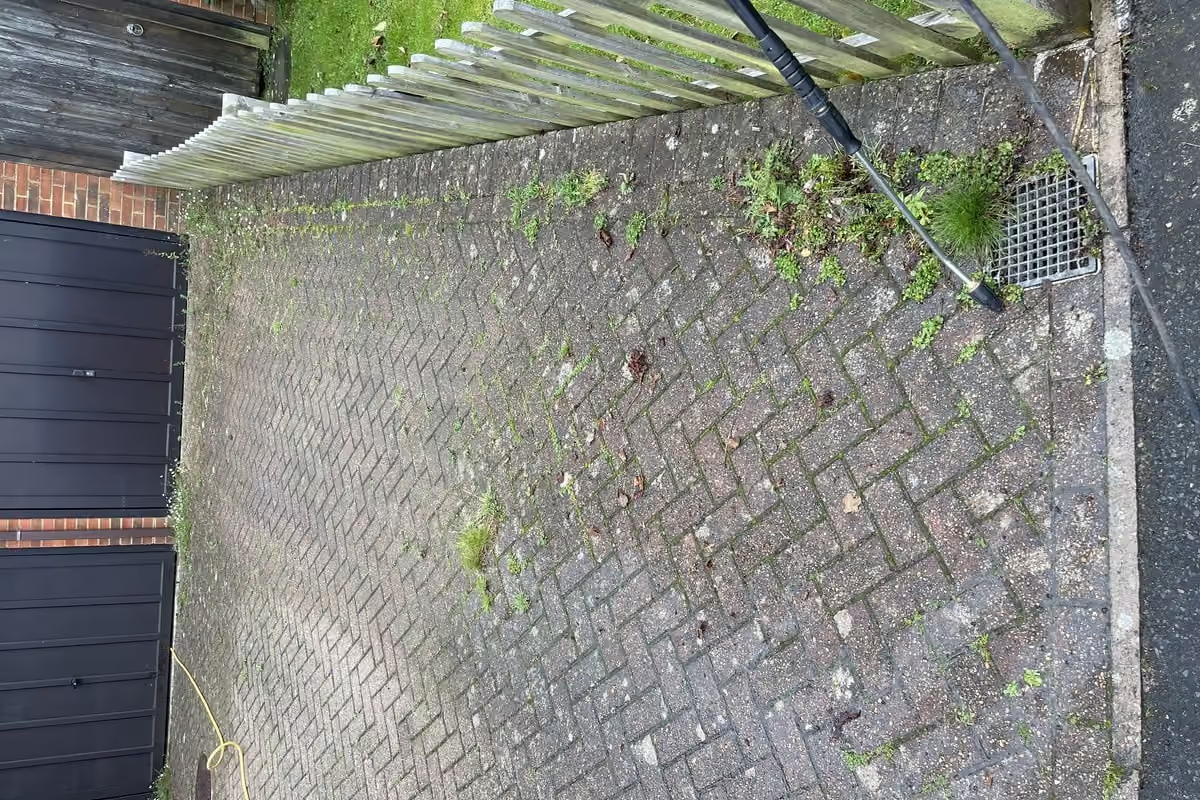
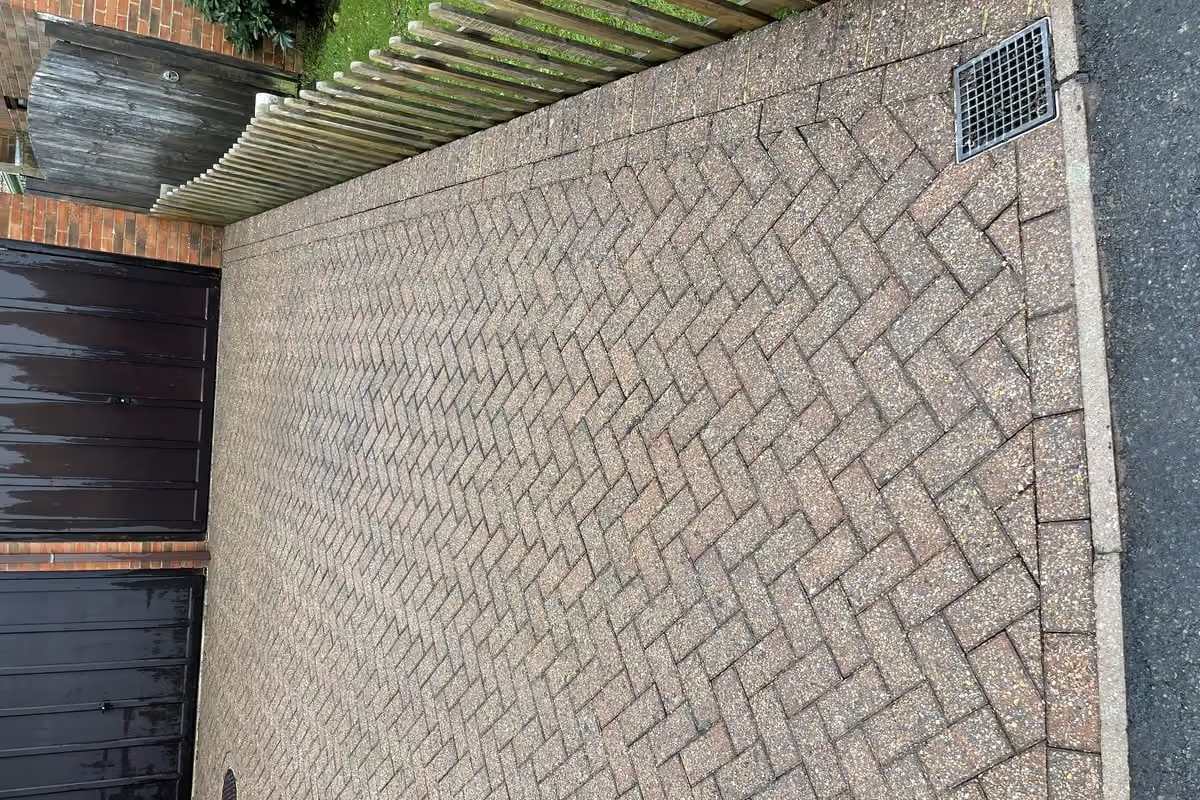
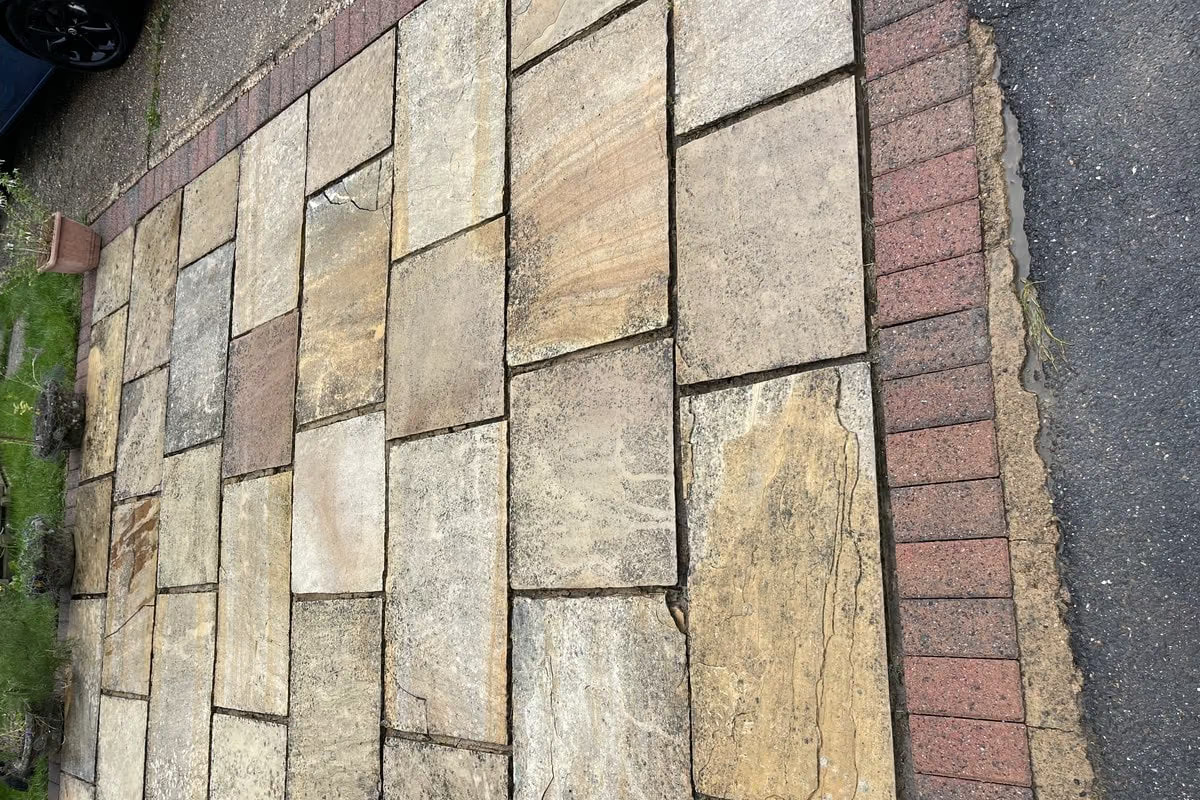
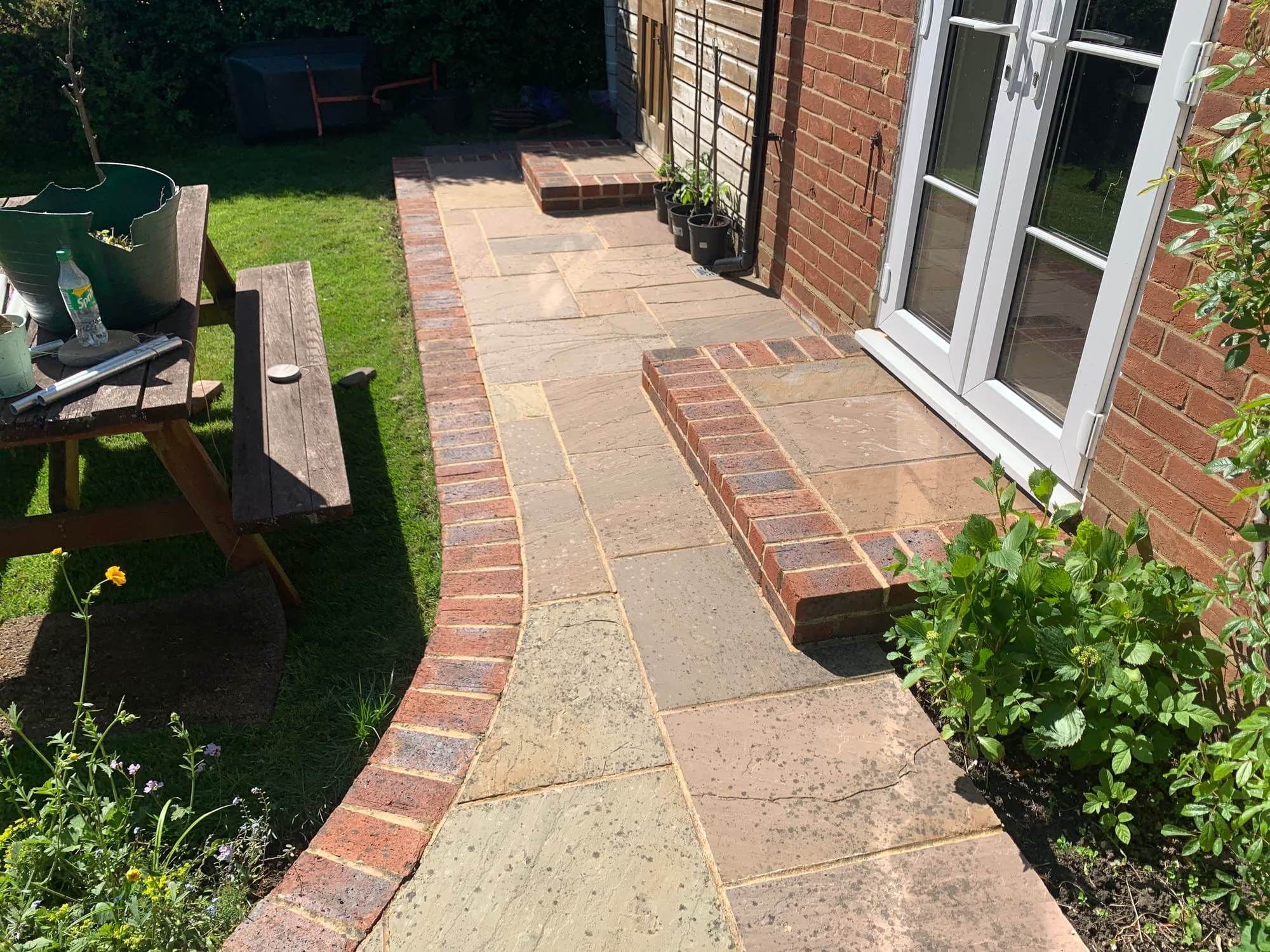
Questions
Asked in Lewes
My house is listed. Can you still clean the path?
Usually yes, and the listing matters less than the material. Listed building consent covers alteration, and cleaning is not alteration. What does matter is that older properties tend to have lime mortar and soft stone, both of which are easily damaged, so I work at much lower pressure and sometimes soft wash instead. If anything about the job looks like it could change the appearance of a listed surface permanently, I will tell you to check with the conservation officer first rather than risk it.
What is the risk with old York stone?
York stone is laminar, meaning it splits along bedding planes. Where a slab has already started to delaminate, a jet washer finds that weakness and lifts the top layer off in sheets. I check the slabs by tapping and looking at the edges before I start, work at reduced pressure, and where a slab is already going I clean around it rather than through it. Some old York stone is better cleaned with a brush and a solution than with a machine at all.
The streets are steep and narrow. Is access a problem?
Sometimes, and I would rather sort it before the day. On the steep streets off the High Street there is often nowhere to leave a van within hose reach, and the gradient means my run-off wants to go downhill into somebody else's property. Both are solvable with planning. Send a photograph that includes the street as well as the job so I can see what I am dealing with.
Will the water damage my flint wall?
It can, which is why I keep the jet off flint entirely unless we have specifically discussed it. Flint walls are held together by lime mortar and the flints themselves are set shallow. Pressure blows the mortar out from between them and once that starts, water gets into the core of the wall. If a flint wall genuinely needs cleaning it is a soft wash with a very gentle rinse, and often the honest advice is to leave it alone.
Get a price
Send photos from Lewes
A couple of photographs and a rough size gets you a fixed written price, usually the same day.
Sent
That is with me.
I read every one myself. If you sent photos I can usually come back with a fixed price the same day, or the next morning if it arrives late.