Is Patio Sealing Worth the Money?
What patio sealer costs to buy, what contractors charge to apply it, and the specific surfaces where sealing is genuinely worth the money and where it is not.
Sealing is where this trade makes its best margin, so you should probably be suspicious of anybody in it telling you to seal your patio. I am going to give you the numbers instead and let you decide.
I do not seal patios. Not at the moment, so there is nothing on the other end of this article for me to sell you. That is also why the numbers below are the real ones.
What the materials cost
A decent impregnating sealer covers roughly 8 to 12 square metres per litre on a porous surface, and a 5 litre tin retails at £45 to £90 depending on the brand and the chemistry.
That works out at somewhere between 80p and £1.90 a square metre in materials.
What contractors charge
Around East Sussex you can expect £5.50 a square metre for an impregnating sealer, £7.50 for a block paving joint-stabilising sealer, and £8.50 to £12 for a colour-enhancing or wet look finish.
So on a 30 square metre patio, an impregnating seal is about £165 of labour against roughly £30 to £55 of sealer.
That gap is not hidden and it is not unreasonable, but you are entitled to know what it consists of.
It is a second visit, which means a second lot of travel and setup. It is slow, careful application, because sealer must go on thin and even and a heavy patch shows permanently. It is the risk of losing the day, because if the forecast turns I cannot start, and if it rains within about eight hours of finishing, the coat is ruined and I do it again at my cost.
It is also the reason I will not seal on the same day as cleaning. The surface has to be dry the whole way through, not dry on top, and that is two or three dry days after a wash.
Where sealing genuinely earns its money
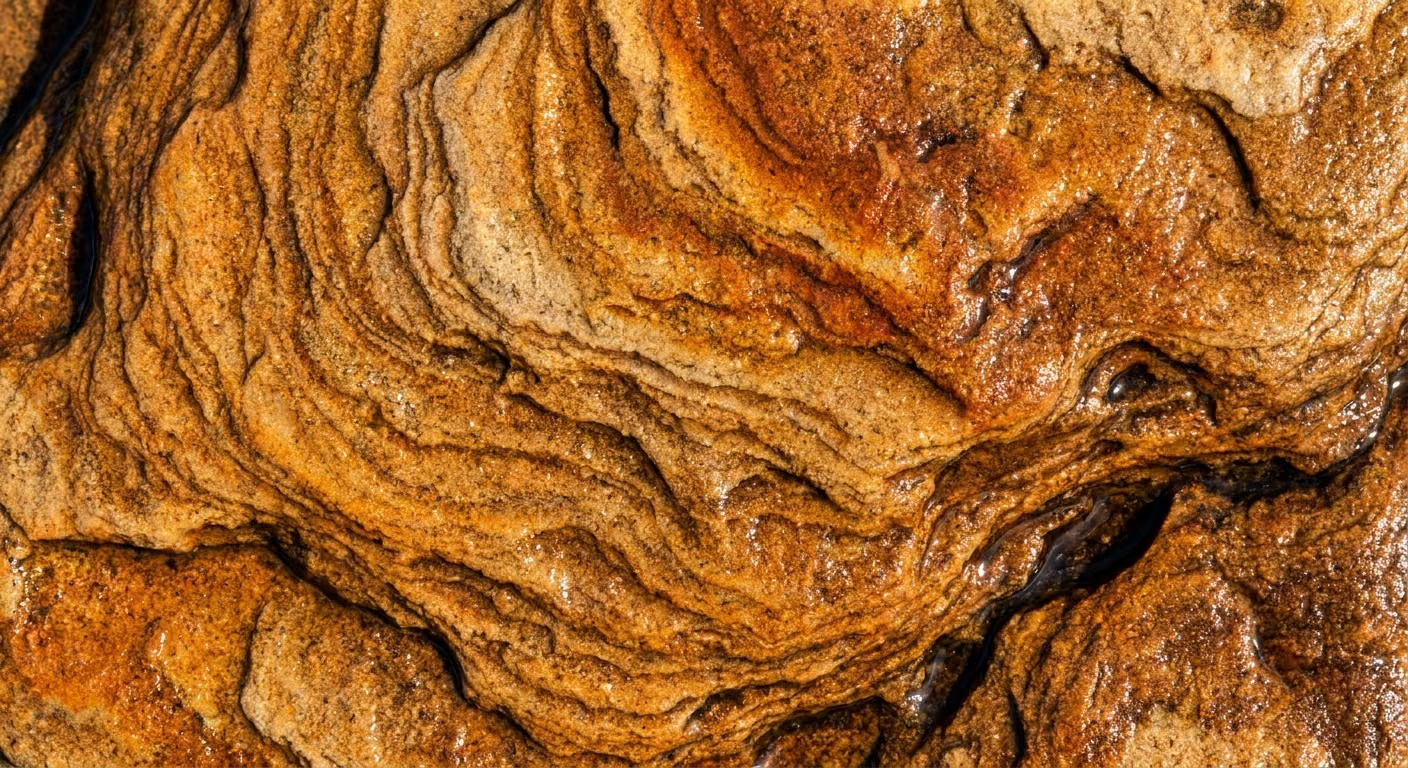
Porous natural sandstone, particularly soft local stone. This is the strongest case. Water carries algae spores into the pore structure and the growth colonises the stone from inside, which is why some patios go green again within months of a perfect clean. An impregnating sealer lines the pores and denies it the habitat. On genuinely porous stone this changes how often the patio needs cleaning rather than just resetting the clock.
Block paving joints. A stabilising sealer binds the kiln-dried sand into a firm plug. It stops the sand washing out, keeps weed seed from rooting, and typically doubles the interval before the drive needs doing again.
Pattern imprinted concrete. Here the sealer is not optional at all, it is the finish. The colour lives in a thin surface layer held down by the sealer, and once the sealer degrades the colour goes with it. Cleaning imprinted concrete without re-sealing it actively shortens the drive’s life.
A patio you want a specific look from. If you want the wet look, the only way to get it is a sealer. That is a taste decision rather than a value one, and it is entirely legitimate.
Where it is not worth it
Porcelain paving. Porcelain is fired dense and has almost no porosity. There is nothing for an impregnating sealer to soak into, so it sits on the surface and wears off in the traffic pattern. Anybody selling you porcelain sealing is selling you something you do not need. The grout between porcelain slabs is a different matter and can be worth sealing.
Dense engineering brick and hard granite setts. Same reason. Very low porosity.
Any patio that is failing. Blown slabs, spalling surfaces or lifting sections. Sealing locks the problem in and makes the repair harder.
A patio you plan to replace within two years. The arithmetic does not work.
Anywhere the cleaning was not done properly first. A sealer fixes whatever is underneath it in place, including dirt.
How long it lasts
Two to four years for an impregnating sealer on a patio. Less on a driveway, because tyres scrub and turning is abrasive. Wet look finishes often need doing sooner, not because they fail faster but because you notice when they start to go patchy.
Nobody honest will tell you ten years.
Re-sealing is easier and cheaper than the first application. The surface is in better condition, less cleaning is needed, and an impregnating sealer can usually be topped up rather than stripped back.
Doing it yourself
On a small patio this is a genuinely reasonable DIY job and I am not going to pretend otherwise.
Clean it properly. Wait for it to be dry all the way through, which is longer than you think and at least two dry days. Apply thinly and evenly with a roller or a low pressure sprayer. Do not let it pool anywhere. Watch the forecast and give it eight hours clear.
The most common mistake by a distance is applying it too thick, which leaves a sticky sheen that collects dirt and looks worse than no sealer at all.
The second most common is not waiting long enough after washing, which traps moisture and gives you a milky bloom under the sealer that can only be fixed by stripping it off.
My actual answer
On a modern concrete slab or porcelain patio in a sheltered garden: probably not worth it.
On porous natural sandstone, especially anywhere shaded or coastal: yes, and it is the single most effective thing you can do to reduce how often you need somebody like me.
On block paving: yes, if the drive is exposed or the weeds come back within a year.
On imprinted concrete: it is not really a choice, it is maintenance.
If a contractor recommends sealing without asking what your paving is made of, get another quote.
The types, in plain terms
Impregnating, sometimes called penetrating. Usually silane-siloxane chemistry. Soaks in, lines the pores, leaves no film and almost no change in appearance. Breathable, meaning moisture inside the stone can still get out. The default choice for natural stone.
Colour-enhancing. An impregnating sealer with a wetting agent that deepens the colour, roughly the look wet stone has. Still breathable. Deepens rather than glosses.
Wet look or gloss. Usually acrylic. Sits on the surface as a film. Noticeably shiny. Wears in traffic patterns and needs stripping rather than topping up when it fails.
Joint stabilising. Applied generously so it floods into block paving joints and binds the sand. The right answer for block paving and the wrong one for a stone patio.
The breathability distinction is the one that matters most and it gets almost no attention in the marketing. On any stone that holds moisture, and particularly on coastal stone carrying salt, a film-forming sealer can trap water and salt underneath and push the face off the slab. Impregnating sealers do not do that because they do not form a barrier to vapour.
What application actually involves
Worth knowing so you can judge whether it was done properly.
The surface must be dry through. Two or three dry days after a wash in summer, longer in autumn. A moisture meter is the honest way to check; the dark-patch test, where you tape a square of plastic down overnight and look for condensation underneath in the morning, is the practical one.
It goes on thin and even, by roller or low pressure sprayer, usually in two coats with the second applied while the first is still tacky rather than fully cured.
It must not pool. Puddled sealer cures into a shiny patch that has to be dissolved off.
Eight hours minimum without rain, and ideally overnight.
Temperature matters. Most products want above 5 degrees and below about 25, so a hot July afternoon is genuinely too warm because the solvent flashes off before the sealer has penetrated.
Realistic lifespans by surface
Natural sandstone patio, impregnating: three to four years.
Natural stone in shade or coastal exposure: two to three.
Block paving, joint stabilising: three to five, less at the entrance where cars turn.
Imprinted concrete, acrylic: four to six.
Wet look on a patio: two to three before it starts looking patchy.
Anything a manufacturer describes as lasting ten years is describing laboratory conditions rather than a driveway in Sussex.
The maths, honestly
On a 30 square metre sandstone patio.
Sealing costs £165 and lasts three years.
Cleaning costs £150, and without sealing you are doing it every eighteen months on a shaded or coastal site.
Over six years: unsealed, four cleans, £600. Sealed, two cleans plus two seals, £630.
Which is to say it roughly breaks even on cost and the difference is that the sealed patio looks better for more of that time and the stone takes less abuse. That is the honest version, and it is more modest than the version you will be sold.
Where it clearly wins is on genuinely porous stone where the growth is inside the material and cleaning intervals are down to a year or less. There the arithmetic changes decisively.
Where it clearly loses is on dense modern paving in a sunny garden, where the patio would have stayed clean for three years anyway.
What to ask the person who does quote you
Since it will not be me, four questions worth asking, and what a good answer sounds like.
Which product, and why that one on my stone? A name and a reason. “Impregnating silane-siloxane, because your sandstone is porous and the job is to keep water out of the pores” is an answer. “Our sealer” is not.
Will you do a test patch and let me look at it before you do the rest? Yes, in a corner, and it takes ten minutes. A colour-enhancing sealer changes the stone permanently and people do regret it.
How long after the clean? Two or three dry days, minimum. Anyone offering the same afternoon is either not really sealing it or is about to trap moisture under the film.
What is the forecast doing? Rain within about eight hours of application ruins the coat. A contractor who moves your date for weather is looking after your money as well as their own.
If you want the patio cleaned first, that part I do.
Get a price
Send me a couple of photos
Fixed written quote, no visit needed for most jobs, and prices you can already check on this site before you ask.
Sent
That is with me.
I read every one myself. If you sent photos I can usually come back with a fixed price the same day, or the next morning if it arrives late.