Block Paving Cleaning and Re-Sanding: What It Costs
What block paving cleaning and re-sanding costs per square metre, what kiln-dried sand actually does, and why a clean without it leaves your drive worse off.
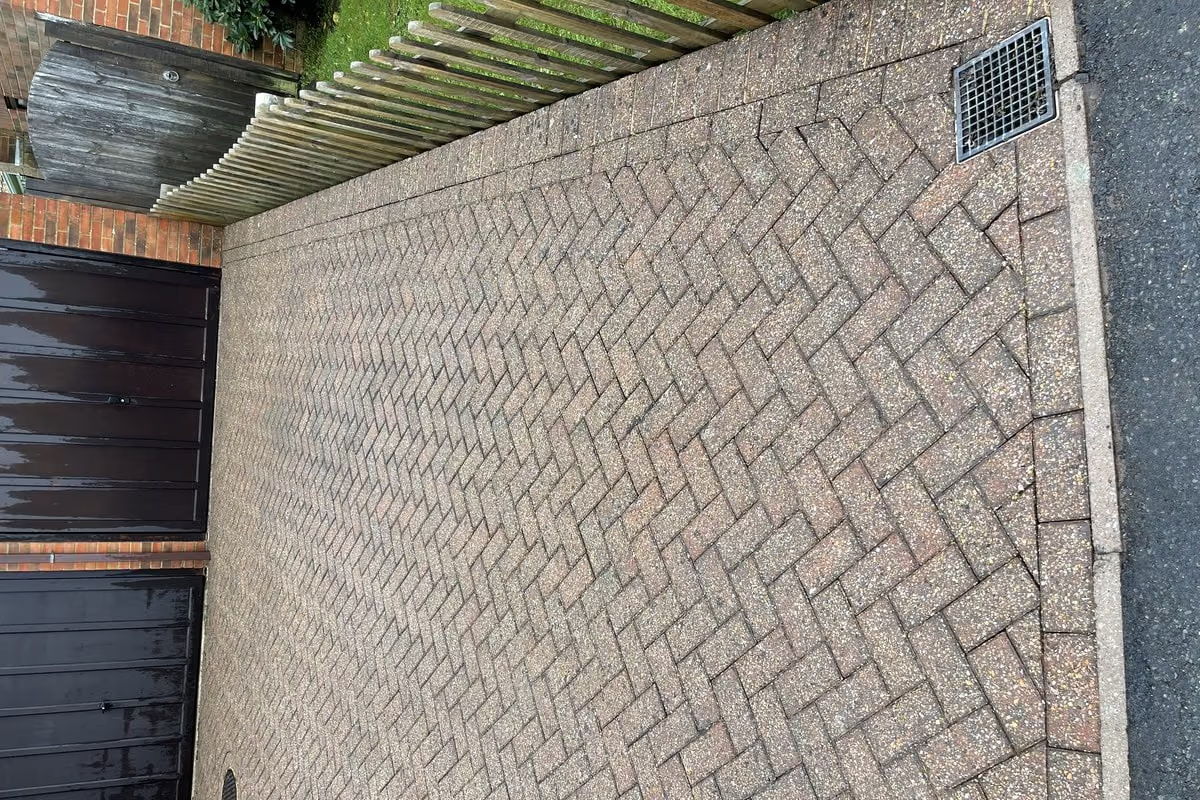
Block paving is the most common driveway surface in the country and the one where the quote you receive is most likely to be missing something important.
That something is sand.
The price
I charge £5.50 a square metre for block paving, cleaned and re-sanded with kiln-dried sand. Minimum job £150.
Across the trade, expect £5 to £7 a square metre for the two together. If you are quoted £4 or under, ask specifically whether re-sanding is included, because at that price it very often is not.
A typical two-car drive of 35 square metres comes to £192.50 at my rate.
What re-sanding actually is
When block paving is laid, the joints between blocks are filled with fine dry sand brushed across the surface until it drops all the way down. That sand is not decoration and it is not there to keep weeds out, though it does help.
It is structural.
Block paving has no mortar anywhere in it. What stops it behaving as a few hundred loose blocks is friction between them, and that friction only exists because the joints are packed tight. Load a full-jointed drive and the weight spreads sideways through the sand into the surrounding blocks and down into the sub-base across a wide area. Load an empty-jointed drive and the block you are standing on takes it alone.
Jet washing removes joint sand. It has to, because the moss and the seed you are trying to get rid of live in it. A high pressure jet will strip a joint down 20 or 30 millimetres in a single pass.
So a clean without a re-sand hands you back a drive that looks better and is structurally worse than it was before.
Why it has to be kiln-dried
Kiln-dried sand is silica sand that has been heated until there is no moisture in it at all, then bagged.
Dryness is the whole point. Dry sand flows almost like a liquid. Brush it across a dry drive and it runs down into the joint and finds the bottom. Add any moisture and the grains stick to each other, bridge across the top of the joint, and sit there looking full while there is a void underneath.
That is why a job done properly waits for the surface to be dry. In July that can be the same afternoon. In February it usually means I come back the next dry day, and that return visit is in the price rather than charged as a second call-out.
Ordinary building sand is damp, coarse, and often contains clay and silt that will stain the blocks. It is the wrong material and using it is a shortcut you can see within a season.
The signs your joints are empty
Weeds are the obvious one, because an empty joint is a seed bed with drainage.
More telling is movement. Stand on a block near the middle of the drive and rock your weight. If it moves independently of its neighbours, the interlock has gone.
Then look at the edges of individual blocks, particularly near the entrance where cars turn. Chipping and rounded corners mean blocks have been knocking against each other under load rather than being held apart by packed sand.
Finally, look along the laying pattern from an upstairs window. A herringbone that has started to wander out of line, usually near the road, is a drive that has been moving for years.
What is and is not included
A properly quoted block paving job should include the wash, edge and detail work with a lance, removal of the slurry, and re-sanding with kiln-dried sand.
It should not include, unless separately priced and discussed, sealing, weed treatment, lifting and re-laying sunken areas, or replacing damaged blocks.
Ask one question of any quote: “Does that price include re-sanding with kiln-dried sand?” The answer tells you what you need to know about the whole quote.
Sealing, as a separate decision
A joint-stabilising sealer binds the top of the fresh sand into a firm plug. It is £7.50 a square metre at my rates, applied on a separate dry visit because the sand must be bone dry.
On block paving this is the one sealer I actively recommend. It stops the sand washing out in heavy rain, denies weed seed anywhere to root, and roughly doubles the interval before the drive needs doing again.
On a 35 square metre drive that is another £262.50, which is a real sum and worth thinking about rather than agreeing to on the doorstep. My rough test: if your drive is exposed, or you have had weeds back within a year of the last clean, it pays for itself. If it is sheltered and stays clean for three years anyway, it does not.
How much sand a drive takes
More than people expect, and it is worth knowing so you can tell whether the job was done.
A 35 square metre drive with genuinely empty joints will take somewhere between three and five 25 kilogram bags. If somebody has cleaned your drive and used half a bag, the joints are not full.
It will also settle. After the first heavy rain the sand compacts and drops, and the joints will take a little more. Keeping half a bag back and topping up a month later is worth doing, and I tell people that rather than pretending one visit is permanent.
The honest summary
£5 to £7 a square metre for cleaning and re-sanding together. Roughly £190 for a standard two-car drive. Another £250 or so if you want it stabilised.
And if a quote does not mention sand, it is not a cheaper quote. It is a different job.
What the job should take
A 35 square metre drive is most of a working day: roughly twenty minutes setting up, two and a half to three hours washing, then re-sanding once it is dry.
If somebody is in and out in ninety minutes on a drive that size, they have not done the edges and they have not re-sanded.
If it is taking two days on a drive that size with no thick moss, something has gone wrong.
Ask for an expected time on site when you get the quote. It is a useful cross-check on whether the price makes sense, and anybody quoting honestly can tell you.
The winter two-visit pattern
Between November and March, most block paving jobs in Sussex are two visits, and this is worth understanding before you book so it does not feel like a problem.
The wash happens on day one. The drive is then too wet for sand to travel into the joints, and on clay ground inland it can stay that way for two or three days.
So I come back on the next dry day and sand it.
That return trip is in the original price and is not a second call-out charge. Anybody who cleans your drive in November and sands it the same afternoon has brushed damp sand across a wet surface, and you will have joints that are full at the top with a void underneath.
If a winter quote does not mention this, ask.
Sand quantities, so you can check the work
A useful and rarely mentioned cross-check.
A 35 square metre drive with genuinely empty joints takes three to five 25 kilogram bags of kiln-dried sand.
A drive whose joints were mostly still full takes one to two.
If your drive had weeds growing through it and somebody used half a bag, the joints are not full. Ask what went in. Any honest contractor knows, because they carried it.
It will also settle. After the first heavy rain the sand compacts and drops a few millimetres, and the joints will take a little more. Keeping half a bag back to top up in a month is worth doing, and it is the sort of thing worth being told rather than discovering.
Doing the re-sanding yourself
If somebody has cleaned your drive and left the joints empty, this is a genuinely reasonable DIY job and it will stop the deterioration.
Wait for a properly dry day. Not damp, dry.
Buy kiln-dried sand, not building sand, not play sand. It is sold in 20 or 25 kilogram bags at any builders’ merchant.
Tip it out in heaps and brush it diagonally across the blocks with a soft broom, so it drops into the joints rather than skating along the lines.
Work it in, go over it again, then leave the surplus on for a day or two so foot traffic and vibration settle it further.
Sweep the excess off and keep it for a top-up after the first rain.
It is two hours of steady work on a typical drive and it is the single most valuable thing you can do for block paving.
Get a price
Send me a couple of photos
Fixed written quote, no visit needed for most jobs, and prices you can already check on this site before you ask.
Sent
That is with me.
I read every one myself. If you sent photos I can usually come back with a fixed price the same day, or the next morning if it arrives late.