Decking Cleaning in Seaford & East Sussex
Cleaned at a pressure that will not raise the grain and leave you with a splintery deck. Softwood, hardwood and composite, £5.50 a square metre.
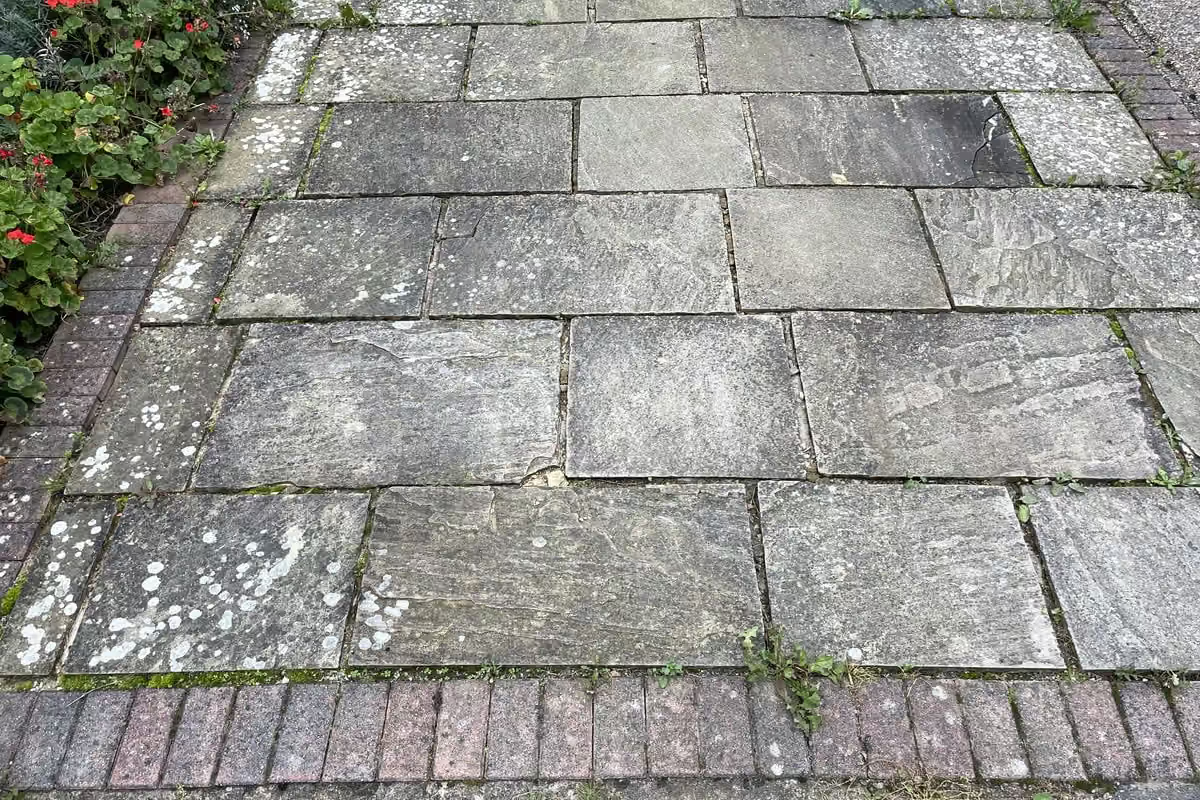
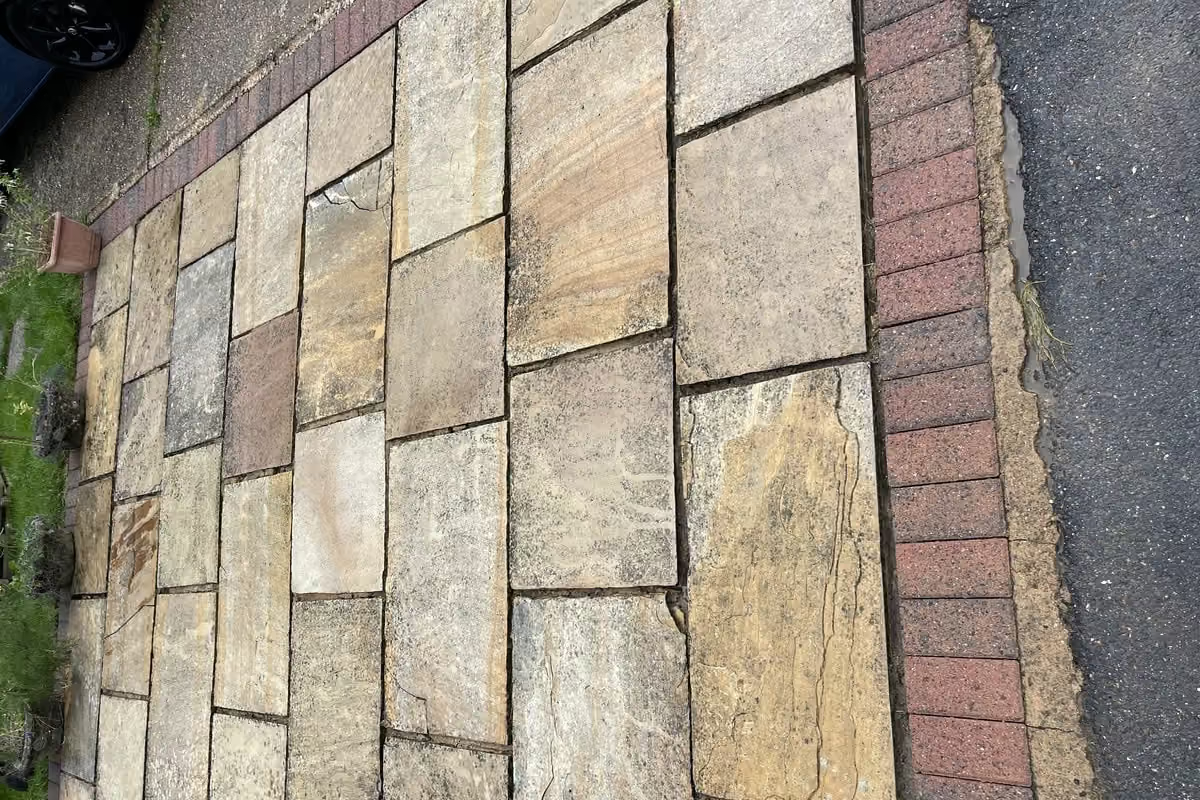
Decking is the surface where the wrong approach does visible damage fastest, and where I turn down the pressure furthest.
What jet washing does to timber
Softwood decking is not uniform. It has soft early wood and harder late wood laid down in alternating bands, which is what gives timber its grain. A jet washer erodes the soft bands faster than the hard ones.
What you get is a deck with a raised, fibrous surface. It looks acceptable while it is wet. It dries into something furry and splintery that catches bare feet, holds dirt in the raised fibres, and goes green again faster than it did before because there is more surface area for the algae to live on.
That damage is not reversible without sanding the boards back, which on a large deck is a bigger job than the cleaning was.
How I clean it instead
Low pressure with a wide fan, worked along the grain rather than across it, held well back. On tired softwood I drop the pressure again or move to a soft wash: a cleaning solution, a stiff brush, dwell time, then a low pressure rinse.
Soft washing is slower and it does not have the immediate drama of a jet washer cutting a clean stripe. It also leaves you with boards that are smooth, so I would rather sell you the slower version.
Then the gaps between the boards. Leaf mulch and silt pack into them and hold water against the joists underneath, which is where rot starts. I clear them out as part of the job, because a clean deck sitting on wet joists is a short-term result.
Composite decking
Composite cleans up easily and the pressure limit still applies, for a different reason. Composite boards have a moulded surface texture, and too much pressure scours it flat and leaves shiny patches that never quite match.
Most composite decking needs a wash and a mould treatment and nothing else. It does not need oiling or sealing. If yours is still in warranty, check the manufacturer’s guidance, because several of them state a maximum pressure and will use it against you.
The green film, and why it comes back
The slippery green on a deck is algae, and it comes off readily. Whether it stays off depends on things that have nothing to do with how well it was cleaned.
A north-facing deck in shade for most of the day will green over again within a year. A deck under a tree gets leaf fall and the tannins that come with it. A deck sitting directly on soil with no airflow underneath stays damp from below and there is nothing a wash can do about that.
A mould and algae treatment after cleaning is £1.50 a square metre and it is worth it on any deck that does not get direct sun. It buys a year or more.
What cleaning cannot fix
If boards feel soft underfoot, or you can push a screwdriver into one, that is rot. Cleaning will make a rotten deck look considerably better without making it any safer, and I would rather tell you that on the quote than after.
Cupped boards, where the surface has curved so water sits in a channel along each board, are a sign the timber has been wetting and drying unevenly. Usually it means the deck was laid the wrong way up or has no ventilation underneath. Cleaning is fine, it just will not change the shape of the boards.
Loose or protruding fixings I will point out. A raised screw head on a deck is the thing most likely to injure somebody, and it takes seconds to spot while I am working across it on my knees.
Oiling and staining
I do not offer it, and the honest reason is that doing it properly takes several consecutive dry days and is really a decorating job rather than a cleaning one.
What I will tell you is the right order. Clean first, always. Let the timber dry properly, which is at least two or three dry days and longer in autumn. Then oil. Putting oil onto damp or dirty timber traps the dirt and the moisture underneath it, and the finish lifts within a season.
If you are doing it yourself, the most common mistake is not waiting long enough after the wash.
Cost and timing
£5.50 a square metre. Mould and algae treatment £1.50 on top. Minimum job £150, which on decking binds fairly often because most domestic decks are between 15 and 30 square metres.
Late spring is the best time, once the worst of the wet has passed and before you want to use it. Autumn is the second best, clearing the summer’s growth and the first leaf fall before winter sets in.
Send a couple of photographs including a close one of the board surface, and say whether the boards are softwood, hardwood or composite. If you do not know, the close photograph will usually tell me.
From my own jobs
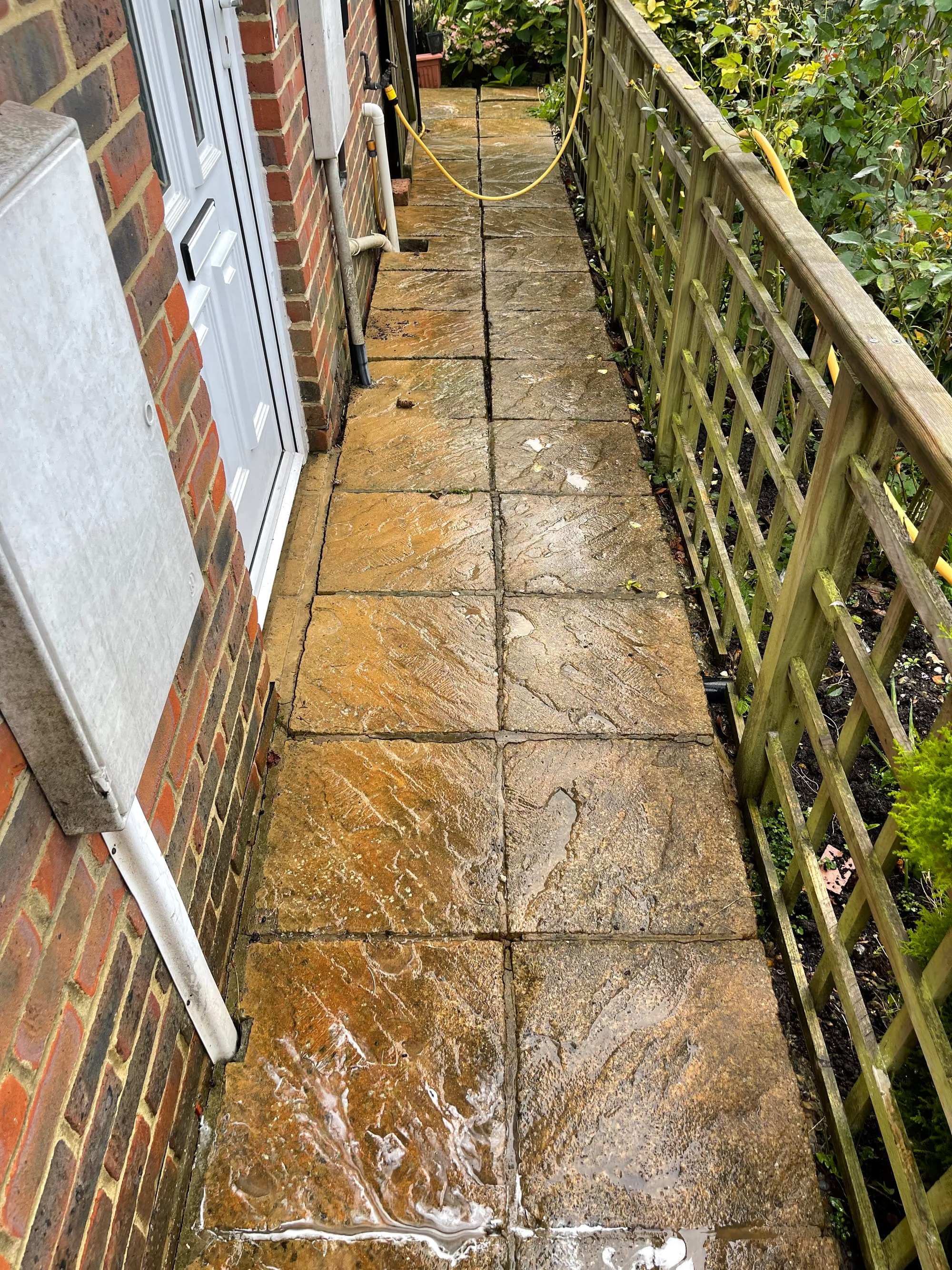
What this looks like in practice
Questions
Decking cleaning: what people ask
Will jet washing ruin my decking?
It can, easily. Softwood decking is timber with a soft grain between harder growth rings, and a jet washer erodes the soft part first. You end up with a furred, splintery surface that then holds more dirt than it did before. So it is low pressure with a wide fan along the grain, or a soft wash with a cleaner and a brush where the boards are already tired.
Can you clean composite decking?
Yes, and it is straightforward, but the pressure limit still applies because composite boards have a surface texture that can be scoured flat. Most composite decking just needs a proper wash and a mould treatment. Check the manufacturer guidance if it is still in warranty, because some of them are specific about pressure.
Do you re-oil or stain the deck afterwards?
I clean, and I will tell you honestly when a deck needs re-oiling. I do not offer staining or oiling as a service because doing it properly takes several dry days and is really a decorating job. Cleaning first is the right order either way, and the timber needs to be fully dry before anything goes on it.
The boards are green and slippery. Is that fixable?
Yes, that is algae and it comes off. It comes back faster on a north-facing deck or one under trees, so a mould and algae treatment after cleaning is worth the small extra. If boards are soft underfoot or cupping badly, that is rot rather than dirt, and cleaning will make it look better without making it safe.
Get a price
Send me photos and I will price your decking cleaning
Two or three photos and a rough size is all I need. Fixed price back in writing, usually the same day.
Sent
That is with me.
I read every one myself. If you sent photos I can usually come back with a fixed price the same day, or the next morning if it arrives late.