Driveway & Patio Cleaning in Battle
Local Ashdown sandstone that grows algae inside the stone rather than on top of it, in a wooded, damp corner of the High Weald. The furthest job on my list and the one that needs the most patience.
- Distance
- 25 miles
- Drive
- 48 min
- Postcode
- TN33
- Rate
- from £4.50/m²
Battle is 25 miles from Seaford, the furthest thing on my list and past the radius I normally quote. I take work there, grouped with the eastern jobs, and the reason it is worth a page of its own is the stone.
Ashdown Sand
The High Weald around Battle is built on the Ashdown Formation, and a lot of the older local building and paving material came out of the ground within a few miles of where it sits.
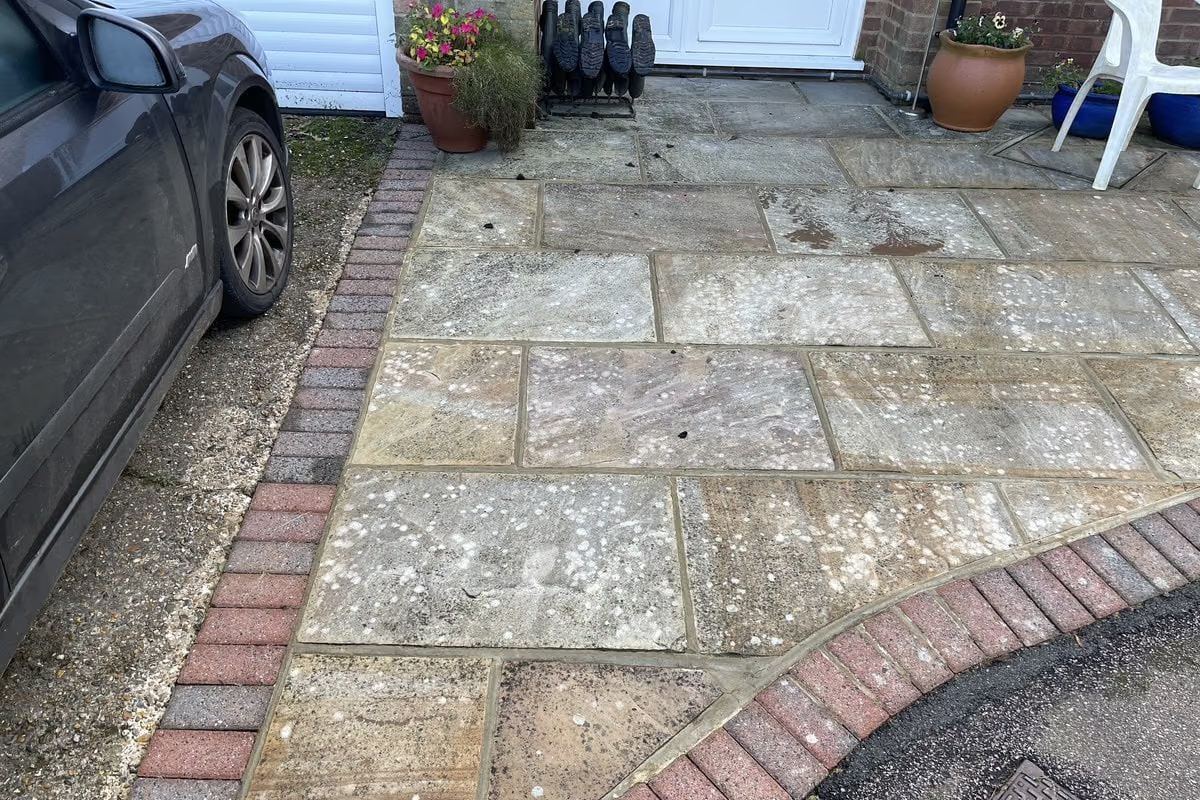
That stone is soft and it is porous. Considerably more porous than the imported Indian sandstone that makes up most modern patios, and vastly more so than concrete or porcelain.
Porosity changes the whole nature of the cleaning problem. On a dense surface, algae is a film on top and cleaning removes it. On Ashdown Sand, water carries spores into the pore structure in the top few millimetres, and the colony lives inside the stone. You can clean the surface perfectly and leave a healthy population underneath it, which then recolonises from within over the following months.
That is why customers here tell me their patio was green again by autumn when the same treatment on a Polegate block drive lasted two years. It is not the clean, it is the material.
Which is why I recommend sealing here
I spend most of my sealing page telling people they do not need it. Battle is the exception.
An impregnating sealer works by lining the pores of the stone so that water cannot get in. On dense paving that is a convenience: it keeps stains on the surface where you can wipe them off. On genuinely porous local sandstone it does something more fundamental, which is deny the algae the habitat it has been using.
Clean, allow two or three dry days, then seal, and you have changed the interval between cleans rather than simply resetting the clock. That is the strongest case for sealing anywhere on my patch.
Frost, and the flaking you may already have
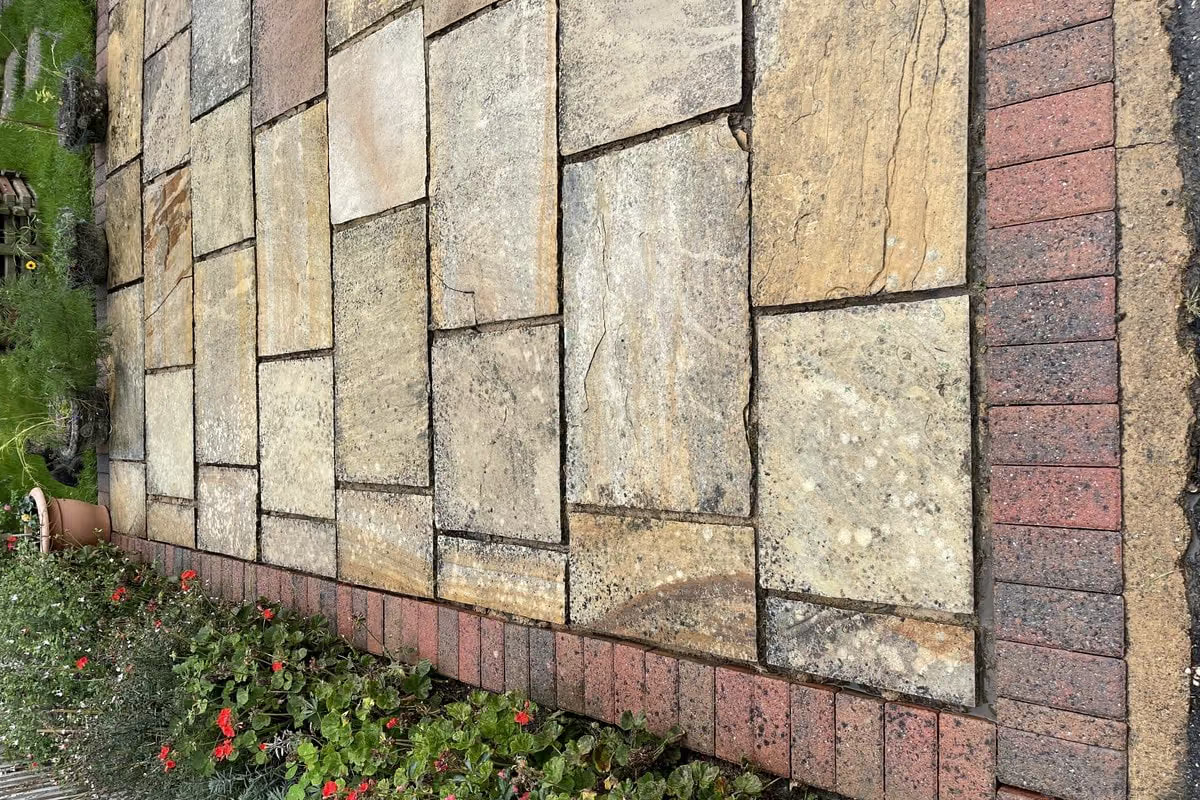
Porous stone that holds water also holds ice. Water expands as it freezes and pushes thin flakes off the surface, which is called spalling, and on old Ashdown Sand paving it is common.
Thick moss makes it worse by keeping the stone saturated right through winter, so a mossy patio here is not only unsightly, it is actively shortening the life of the slabs.
Cleaning a spalling slab makes the damage more visible, because the growth was hiding it. I will point that out before I start rather than after. On a badly spalled patio my honest view is often that cleaning is the wrong spend and the slabs need replacing.
Woods and damp
Battle sits in wooded, damp country with a high proportion of tree cover and rainfall well above the coastal average. Everything I have said elsewhere about shade, leaf tannin and slow drying applies here at the stronger end of the range.
In practice that means winter jobs here are two-visit jobs, and it means the biocide treatment is worth taking on almost any surface.
Netherfield, Catsfield and the lanes
Netherfield, Catsfield, Whatlington and Sedlescombe are the same trip and the same rate. Properties out that way tend to be larger, older and more likely to involve local stone rather than imported paving, which brings all of the above into play.
Being straight about the distance
Battle is a 48 minute drive each way and I am not going to pretend otherwise. Your price does not include a travel charge and it does not need to, because I only take work out there when I can group it.
For a job of 30 square metres or more that is rarely an issue. For a small patio I may ask you to wait a fortnight until I have another booking in the same direction. That is the honest arrangement, and it is better than quoting you a Seaford lead time and then not turning up.
What it costs
Natural stone, which covers local sandstone, is £5 a square metre. An impregnating sealer is £5.50 a square metre on a separate dry visit, and here I mean it as a recommendation rather than an option. Slabs and concrete £4.50, block paving £5.50 with re-sanding. Minimum job £150.
Getting here
25 road miles from Seaford, about 48 minutes via the A27 then A271 and A2100. Battle is at the outer edge of what I cover, so I try to book it alongside another job in the same direction. It does not change your price, it just means I may offer you a particular week rather than any day you like.
Villages and areas I work in around Battle: Netherfield, Catsfield, Whatlington, Sedlescombe. If you are somewhere not on that list but nearby, ask anyway.
The work
What a clean actually looks like
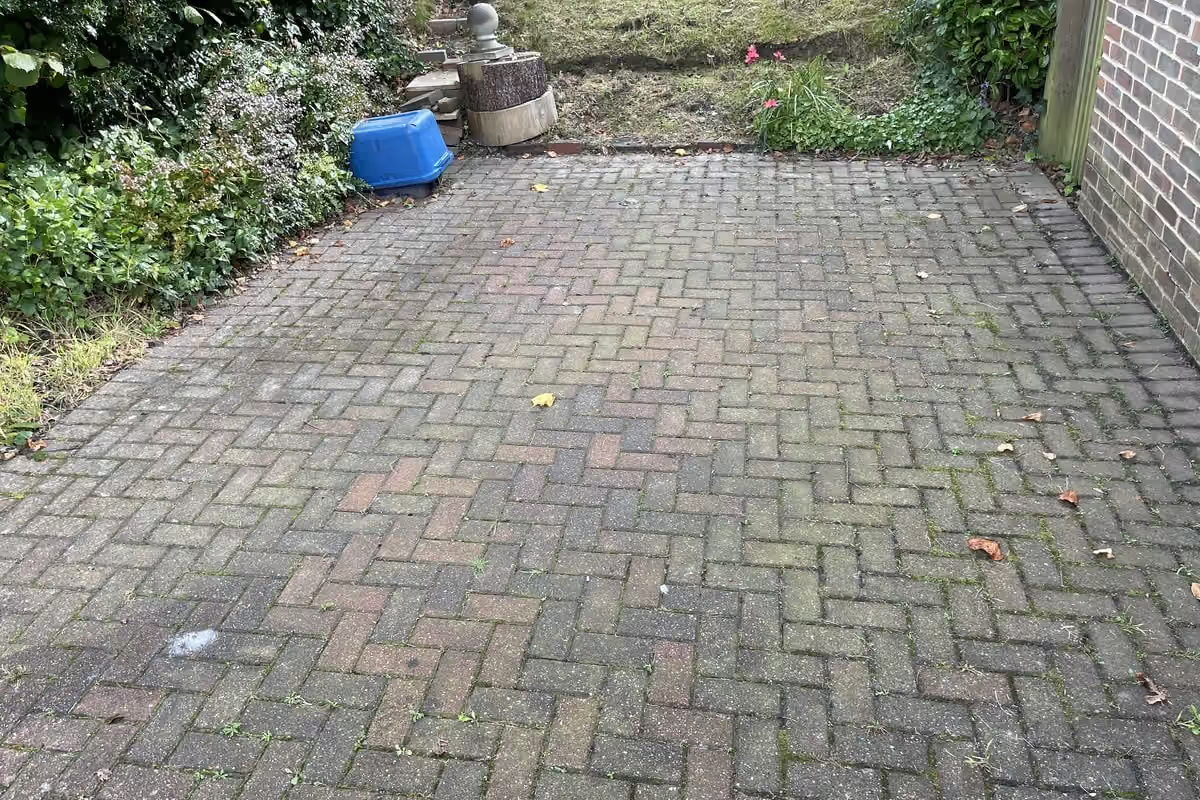
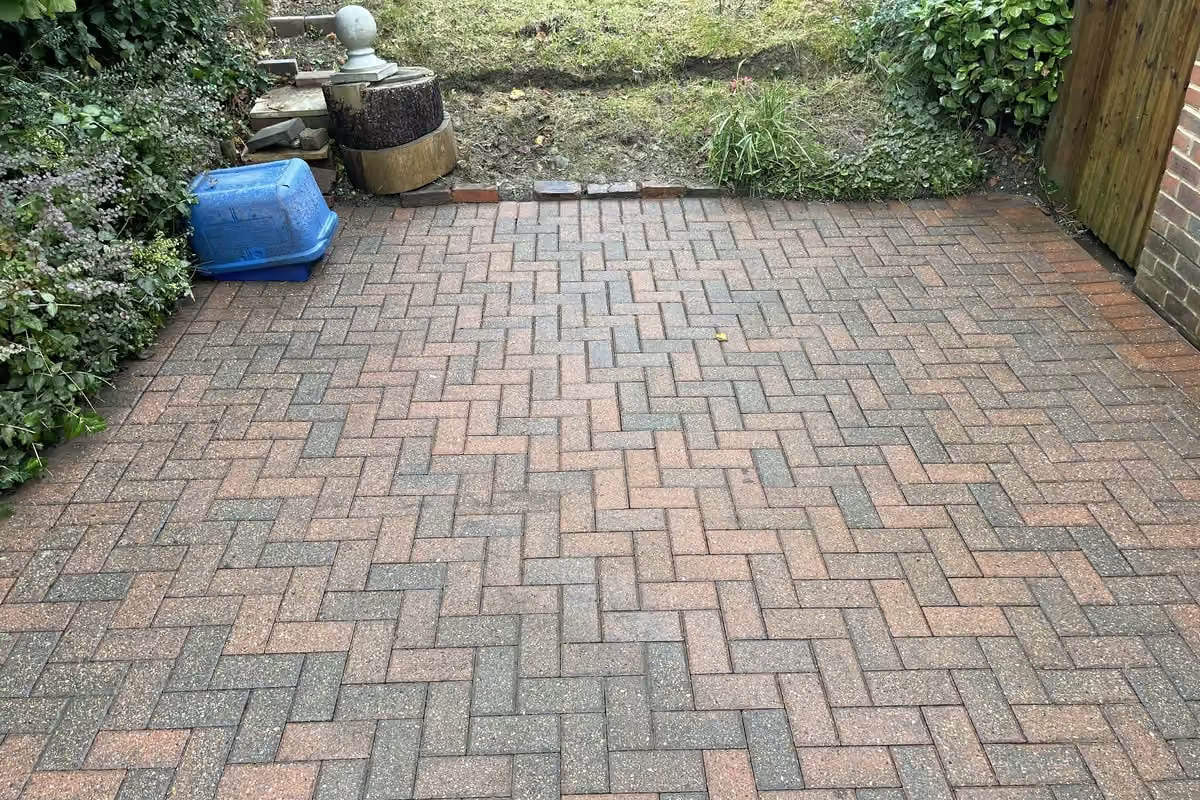
Questions
Asked in Battle
My sandstone paving goes green again within months. Why?
Because the growth is not only on the surface. Local Ashdown sandstone is unusually porous, so water and spores get into the top few millimetres of the stone and colonise it from inside. Cleaning the surface leaves that internal population intact and it recolonises from within. This is the one place on my list where I would say an impregnating sealer is close to essential rather than optional, because sealing the pores is what actually breaks the cycle.
Is sealing really worth it on my patio?
On genuinely porous local sandstone, yes, and I say that having spent most of my sealing page telling people when not to bother. An impregnating sealer lines the pores so water cannot carry spores into the stone. On dense imported paving it buys you convenience. On soft Ashdown Sand it changes how often the patio needs cleaning at all, which is a different kind of value.
You are 25 miles away. Will you actually come?
Yes, with a caveat about timing. Battle is the furthest point I work and it is a 48 minute drive each way, so I group it with Bexhill and the eastern jobs rather than making a special trip. Your price is identical to a job in Seaford. What I will ask for is flexibility on the date, and for a job under about 20 square metres I may ask you to wait until I have another booking out that way.
The stone under my mossy patio looks like it is flaking. Is that the moss?
Probably frost rather than moss, though the moss makes it worse by holding water in the stone through winter. Water in the pores expands when it freezes and pushes the surface off in thin flakes. Once a slab is spalling, cleaning will make it look worse rather than better because you are removing the growth that was hiding it. I will point it out before I start so you are not surprised.
Get a price
Send photos from Battle
A couple of photographs and a rough size gets you a fixed written price, usually the same day.
Sent
That is with me.
I read every one myself. If you sent photos I can usually come back with a fixed price the same day, or the next morning if it arrives late.