Does Jet Washing Damage Tarmac?
Jet washing tarmac usually does more harm than good. What happens to the surface, what to do instead, and why doorstep tarmac sealing is best avoided.
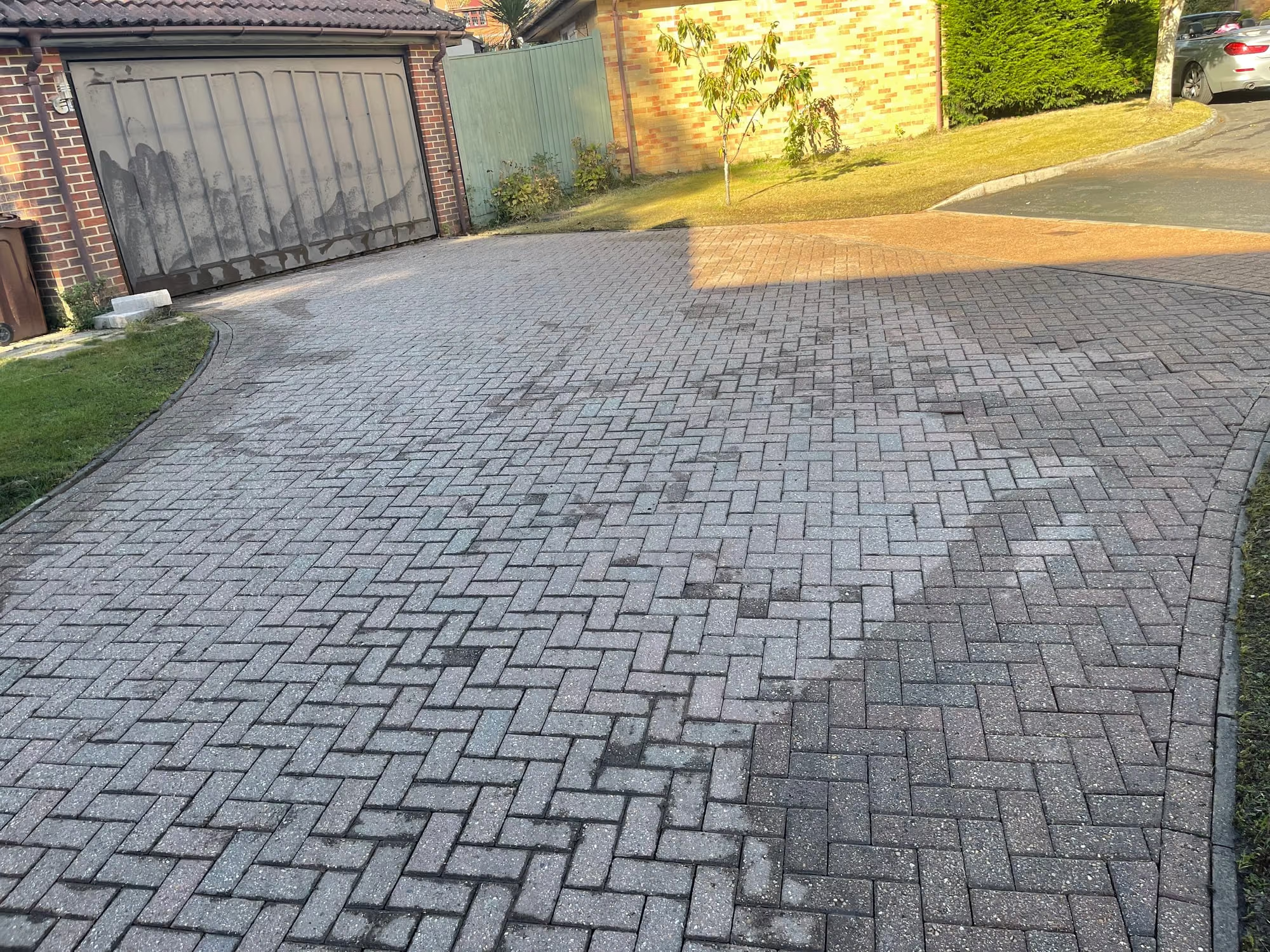
Short answer: usually yes, and I turn down tarmac jet washing work for that reason.
This is one of the few jobs where I will talk somebody out of hiring me, so it is worth explaining properly.
What tarmac actually is
Tarmac, or more accurately asphalt, is graded stone held together by bitumen. The bitumen is a viscous binder that coats each piece of aggregate and glues the whole mat together.
That is the important part. Unlike concrete, which is a solid material all the way through, tarmac is stones stuck together with something that softens in heat, hardens in cold, and gradually oxidises and loses flexibility with age.
What a jet washer does to it
Three things, in roughly this order.
It strips binder from the surface. High pressure water lifts the thin film of bitumen coating the top layer of aggregate. What you are left with is exposed stone with nothing holding it, which is why a jet washed tarmac drive often looks paler and rougher afterwards rather than cleaner.
It dislodges aggregate. Once the binder film has gone, individual stones come out. You will see them in the run-off. Every stone that leaves is a small pit that collects water.
It gets underneath. Where the surface has already started to fret, or at an edge or a crack, water at pressure travels sideways beneath the mat. On an older drive with a weak base, that can lift a whole area.
An older tarmac drive that has oxidised is more vulnerable than a newer one, and older drives are exactly the ones people want to clean.
What the green stuff actually is
Tarmac goes green because algae grows on it, in the same way it grows on everything else. It is not a sign the tarmac is failing.
The good news is that algae on tarmac sits on the surface rather than rooting into it, because tarmac is not porous in the way stone is. That means it can be killed rather than blasted off.
What to do instead
A biocide treatment. Apply a proper exterior biocide, leave it, and let the weather do the work over the following weeks. It kills the growth and the dead material washes away with rain. This is the correct treatment for green tarmac and it does not involve pressure at all.
A very low pressure rinse. If you want to speed it up, a garden hose or a pressure washer at genuinely low pressure with a wide fan, kept well back, will move the dead material without lifting binder. This is a rinse rather than a wash.
Sweeping. Keeping leaf litter and silt off the surface makes a bigger difference than most people expect, because both hold moisture against the tarmac.
If your tarmac drive is genuinely oil-stained or badly deteriorated, cleaning is not the answer either. A surface dressing or an overlay by a proper surfacing contractor is.
Tarmac sealing, and why I would be careful
Once you start looking into tarmac you will find people offering to seal or restore it with a black bitumen-based dressing.
Some of this is legitimate work done by surfacing contractors. A great deal of it is not, and it has a long association with doorstep trading.
The pattern is familiar. Somebody knocks, says they have material left over from a job nearby, offers a price that sounds low, and applies a thin coat of black emulsion that looks excellent for a few months. Then it wears off in the tyre tracks. What you are left with is patchier than the faded tarmac was, and harder to put right.
The warning signs are the ones you would expect. Unsolicited doorstep approach, pressure to decide today, cash preferred, leftover materials from another job, no written quote, no fixed address.
If you genuinely want your tarmac restored, approach a surfacing contractor yourself, get it in writing, and be wary of anyone who came to you.
The one exception
There is a version of tarmac cleaning that is fine, and it is worth knowing because it covers a lot of what people actually want.
Cleaning the block paving edging, the concrete apron by the garage, or the slab path alongside a tarmac drive is completely straightforward. Those surfaces take pressure without complaint.
On plenty of jobs the drive looks tired because the edges and the surrounding hard landscaping are green, not because the tarmac itself is. Doing those and treating the tarmac with a biocide gets you most of the visual improvement with none of the risk.
That is usually what I end up quoting for, and I would rather do that than take money for something that leaves your drive worse.
How to tell if yours has already been damaged
Loose stones. Brush your hand across the surface. If aggregate comes away, the binder film has gone.
A paler, greyer look than it had. Fresh tarmac is nearly black because the bitumen film coats every stone. As that film is lost the underlying aggregate colour shows through.
Fretting at the edges. Where the mat meets a kerb or a drive edge, look for a crumbling margin.
Pitting in a pattern. Arcs or stripes where somebody swept a lance.
Some of this is simply age. Tarmac oxidises and greys over fifteen or twenty years regardless of what anybody does to it. What tells you it was pressure rather than time is the pattern: age is uniform, damage follows the shape of somebody’s arm.
Repair options, honestly
Nothing. A greyed, slightly fretted tarmac drive is cosmetically tired and structurally fine, and it will last years more. This is a perfectly reasonable choice and it is what I would do on my own house.
Surface dressing. A proper contractor applies a bituminous binder and rolls fresh chippings into it. This is legitimate work with a real service life and it is what the highways authority does to rural roads. It is not the same thing as the black paint applied by doorstep traders.
An overlay. A new layer of asphalt over the existing one, provided levels allow it at thresholds and gullies. Roughly half the cost of a full replacement.
Full replacement. Dig out and relay. The right answer where the base has failed, which you can identify by cracking in a crazed pattern or areas that flex underfoot.
Get quotes from surfacing contractors you have approached, not from anybody who approached you.
What about the joints between tarmac and everything else
A detail worth knowing, because it is where most tarmac drives actually fail.
The junction between a tarmac mat and a concrete apron, a block edging course or a manhole is a weak line. Water gets in there first, frost works at it, and the tarmac starts breaking away in a strip.
If you are having the block edging cleaned, that seam is exactly where a jet will do damage. I keep pressure off it and work along it rather than into it.
If the seam has already opened, it is worth having it sealed with a bitumen joint sealant before winter. That is a small job and it prevents a much larger one.
Get a price
Send me a couple of photos
Fixed written quote, no visit needed for most jobs, and prices you can already check on this site before you ask.
Sent
That is with me.
I read every one myself. If you sent photos I can usually come back with a fixed price the same day, or the next morning if it arrives late.